
Nobody likes to make changes or adjustments to their daily routine or habits. However, if there is a single activity that one can replace without much friction, it’s mindless snacking. Instead, try natural chewing gum for wellness. Natural Chewing Gum is a great option for you if you are trying to make better lifestyle choices. Each stick of exceptionally high-quality, chicle-chew, xylitol-sweetened, natural gum contains no artificial sweeteners or other synthetic junk. These natural gum sticks help a little with weight management and are excellent for curbing cravings and freshening Breath.
How Natural Gum Trumps Mindless Snacking
Think about what happens after a meal. You just finished eating, and your mind is already thinking about the next snack. That is what causes people to snack in the pantry, mindlessly grabbing sugary treats.
When you chew gum, it sends a signal to your mind that you have completed your meal and resets the chewing cycle. When you keep your craving to snack under control, you make the gum last longer and help keep your fullness longer. All that, and most sugar-free, natural gum has less than 5 calories. That means you can control and keep your blood sugar in check.
Oral Health Benefits That Support Overall Wellness
Oral health is important for overall wellness. When we chew, we produce saliva. Saliva plays an important role in neutralizing acids around our teeth and in promoting the restoration of tooth enamel. More saliva helps strengthen our teeth.
Gum containing xylitol, a natural sugar alcohol, helps fight dental cavities. Clinical studies show that consistent use of xylitol can decrease cavities by 30 to 50%, a greater reduction than sugar, which feeds bacteria that cause cavities.
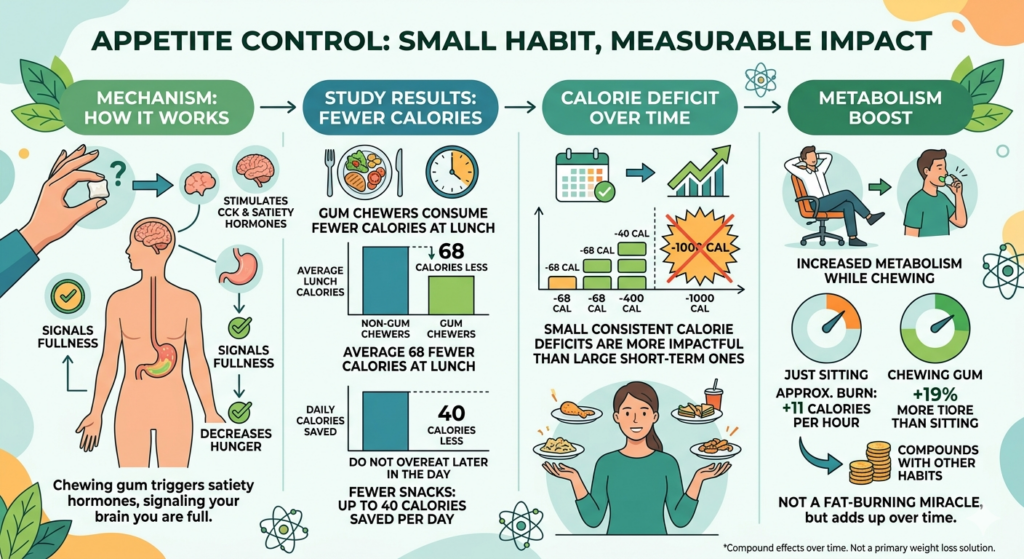
Appetite Control: Small Habit, Measurable Impact
Helping to control appetite can be as simple as chewing gum. Chewing gum stimulates certain hormones, such as cholecystokinin (CCK), which signal that we are full and can decrease hunger.
Studies show that gum chewers consume an average of 68 fewer calories at lunch and do not consume more calories later in the day. In some studies, participants who chewed gum daily also reported eating about 40 calories less per day by consuming fewer snacks.
Over time, small consistent calorie deficits are more impactful than large short-term calorie deficits. Chewing gum leads to fewer calories consumed and a less frequent eating habit. Chewing increases metabolism slightly. It approximates a burn of 11 calories per hour or 19% more than just sitting. It’s not a fat-burning miracle, but compounded with other habits, it adds up.
Stress, Cortisol, and Emotional Eating
Snacking isn’t always hunger-driven, and a lot of it is driven by stress.
Regular chewing has been shown to lower cortisol levels, specifically stress markers, and to improve focus in studies of 20 minutes of daily chewing. Lower stress can lower episodes of emotional eating.
Chewing, mindfulness, and breathing together can create a ritual and a calm one at that. 200-calorie snacks can be replaced with natural gum as a behavioral change.
Selecting Appropriate Gum
Gum isn’t equal. Here is a simple guide:
- Natural xylitol gum has fewer than 5 calories per piece, helps manage cravings, and promotes gum health.
- Conventional gum is typically low-cal, but some varieties have more than 5 calories per piece, with artificial sweeteners and flavors.
- Sugared gum has more than 10 calories per piece, which can increase cavities and add calories.
If you want to focus on your health, your choices should include products that contain clean, natural chicle and plant-based sweeteners. When possible, avoid artificial ingredients.
Choosing the Right Type of Gum
Chew your gum for five to ten minutes after eating to extend the feeling of fullness and signal to your brain that the meal is over. If you experience cravings between meals, chewing two pieces of gum is a good way to help resist the urge to eat dessert. If you chew gum before a workout, it can help boost your focus.
If you want to encourage hydration and saliva production, consider chewing gum on a dry mouth day. You might find you drink more water if you chew gum, as chewing gum increases water intake.
Chewing gum is fun, and there are limits to be aware of. Chewing excessive amounts of xylitol can cause digestive issues due to its mild laxative effect. Ten to fifteen pieces of gum a day is a good amount.
Forming Good Habits
Natural gum is at its best when used with a good set of habits.
If you are doing intermittent fasting, chewing gum is a good option. If you are on a low-carb diet or a calorie-reduction plan, gum is a good option, as it provides the chewing experience without increasing your macros.
For stress-eating, focus and breathe a little more slowly as you chew the gum. Chew, then take a deep breath and exhale, and repeat the deep breaths.
Here, we see the importance of the habit stacking principle. Chewing gum by itself does not mean much, but chewing gum + mindful eating + daily exercise + drinking enough water? That is progress we can sustain.
Realistic Expectations
To be honest, this is not going to be a miracle. Saving 50 calories a day won’t melt off a ton of weight. But we are building a habit. And habit stacking is powerful.
Weight management does not mean we have to be perfect. It is about intentional behavioral change by replacing mindless practices with mindfulness. If chewing gum stops one high-calorie snack a day, that’s a success.
In the long run, several months to several years, small changes are going to mean more than any crash diet you can do.
Common Concerns
Does chewing gum help you lose weight?
It can be a part of a weight management strategy by helping to lower calorie intake and reduce appetite. Chewing gum is most effective when part of an overall balanced diet and exercise program.
Is xylitol safe?
Yes, it is safe to consume xylitol every day, in moderation. It can help with cavities, but too much can cause an upset stomach. For most people, 10-15 pieces a day is safe.
Is chewing gum a meal replacement?
No. It is meant to help manage cravings, not to serve as a substitute for balanced meals.
Does chewing gum break a fast?
Most sugar-free natural gums have such a small amount of calories that it wouldn’t matter when it comes to fasting, but of course, that depends on the fasting protocol you’re following.
Can gum help with eating when stressed?
Certainly, chewing gum has been found to help lower cortisol levels, which could reduce stress and ease the accompanying cravings (when combined with breathing).
A simple habit with a unique target, unlike others
We often seek the large, bold, and dramatic interventions. In the case of wellness, the tiniest of actions has an additional benefit. Chewing natural gum on a low-cost, low-needs basis helps oral health, reduces stress and emotional eating, and helps control or suppress appetite.
Chewing gum is most effective when combined with other interventions to help maintain or reduce appetite.