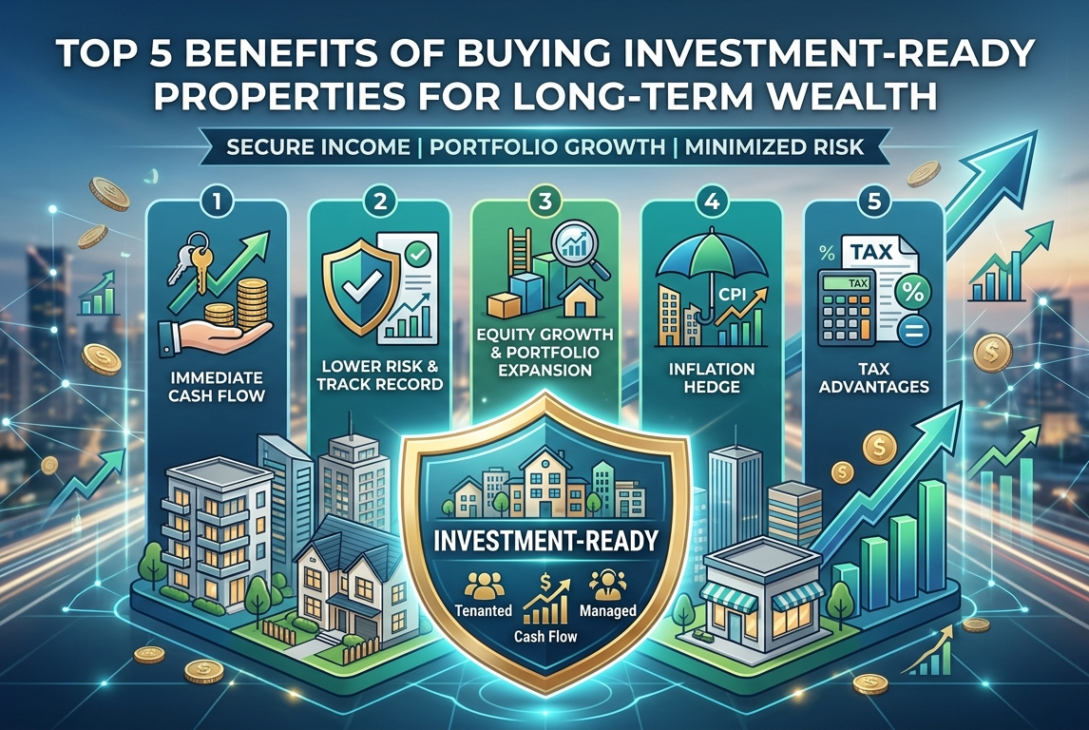
Even in the modern, busy real estate environment, investors are moving towards properties that can provide immediate returns without needless risk. This is precisely why investment ready properties have become a more desirable investment for creating long-term wealth in 2026. The properties are already rented, professionally managed, and generating revenue immediately. You invest in a stable, income-generating asset instead of spending months renovating or finding tenants. This strategy is a clear advantage if you want steady cash flow, portfolio growth, and less uncertainty.
Short-term Cash Flow on Day One
Among the greatest benefits of purchasing fully stabilized property is the ability to earn income immediately. These assets are already performing, unlike fixer-uppers or empty units, which will take time, effort, and additional capital. Immediately after a change of ownership, rental income begins paying expenses such as mortgage payments, maintenance, and operating costs. Investors, too, in most situations receive good cash flow immediately, establishing a continuous stream of income. Such immediate payback not only enhances financial security but also enables you to spend your earnings sooner, accelerating your wealth-building process.
Less Risk and Proven Track Record
There is always a certain degree of risk associated with real estate, and stabilized assets greatly diminish that degree of uncertainty. This includes tenants, lease agreements, and documented financial performance for these properties, so you have a clear view of what to anticipate. You are investing in a track-record property, not one based on projections or assumptions. Payment history, tenant occupancy, and maintenance records are very useful for evaluating the asset’s reliability. Moreover, the renovated and regulation-compliant properties reduce the likelihood of sudden repair expenses and legal complications. This predictability makes them especially attractive to investors interested in both capital conservation and growth.
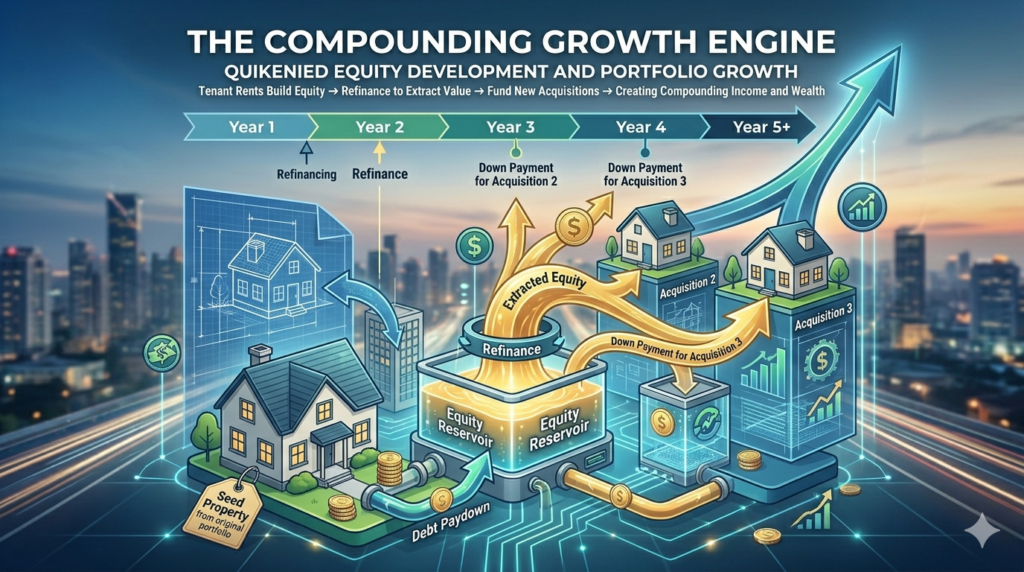
Quickened Equity Development and Portfolio Growth
An income property that is performing meets more than just monthly cash flow; it also accumulates equity. The money tenants spend on rent is used to pay down the loan, which means you own a higher percentage of the property. This equity can be enjoyed in the long run to increase your portfolio. Most investors choose to refinance after a period of consistent performance, based on the property’s higher value and the paid-down balance. The policy enables you to own additional properties without necessarily using your own savings. As you make new acquisitions, your income grows, creating a compounding effect that propels wealth in the long run.
In-House Insurance against Inflation
Purchasing power can be eroded by inflation, but real estate has an inbuilt hedge, particularly when the property has organized lease agreements with annual rent increases. Most of the stabilized properties have leases that are fixed annually based on market conditions or inflation measures. This implies that rental income has the potential to grow over time, offsetting rising costs and enabling profitability. Meanwhile, the price of the property is likely to grow in the long run, which will also improve your financial status. This growth in income and asset appreciation is why income-generating real estate is an effective instrument for wealth maintenance and growth in unstable economic conditions.
Tax Favors That Enhance Returns
There are various tax benefits to real estate investment, and investing in income-generating properties increases those benefits. Investors are usually allowed to deduct mortgage interest, property management fees, and maintenance expenses, thereby reducing their total taxable income. Another important advantage is depreciation. Although the property might be rising in market value, the tax laws permit you to deduct the wear and tear, which results in additional deductions. This would make a great contribution to your net returns. Also, strategies like reinvesting proceeds into new properties can help defer taxes, enabling you to have more capital working for you in the long run. These cost efficiencies contribute significantly to maximizing long-term profitability.
The Reason Turnkey Assets Are Better Than the Traditional Approaches
Classic real estate investments, including fixer-uppers, may be highly profitable; however, they are riskier and more time-consuming, requiring more hands-on involvement. Renovations, tenant sourcing, and management cannot be rushed. Stabilized properties, by contrast, make the process easier. You are not starting from nothing; you are entering an existing system. This ensures they are suitable for new investors seeking ease and experienced investors seeking to scale effectively. The workload is also lighter, enabling you to focus on strategy rather than day-to-day operations and transforming real estate into a scalable investment model.
Frequently Asked Questions
What are investment-ready properties?
These are fully operational properties that are leased and already earning income upon acquisition. They also usually require little direct labor and are an immediate source of cash.
Should these properties be aimed at first-time investors?
Yes. Since they are already established in terms of performance and risk reduction, they can be a good starting point for investors who do not want to undertake a complicated renovation and can be predictable in terms of returns.
Can they be actively managed?
Although there will always be a need for a certain degree of control, these assets are more hands-off than renovation projects, as most investors prefer to hire property managers.
What are their returns compared to those of fixer-ups?
Fixers-uppers can offer higher returns but are riskier and more labor-intensive. Stabilized assets have more predictable, stable income with lower involvement.
Are these properties capable of contributing to long-term wealth?
Absolutely. They can be considered one of the most effective means of long-term financial growth with constant cash flow, equity growth, tax advantages, and the ability to scale.
Developing a Smarter Real Estate Strategy
Real estate investment does not need to be complex or risky to be profitable. By focusing on existing income-producing assets, you can establish a solid financial foundation while positioning yourself for long-term growth. The trick lies in not focusing on immediate profits but on sustainability. Homes that provide reliable monthly cash flow, increase in value and have tax benefits give you a balanced way of wealth creation- one that operates quietly in the background as you concentrate on growing your portfolio.