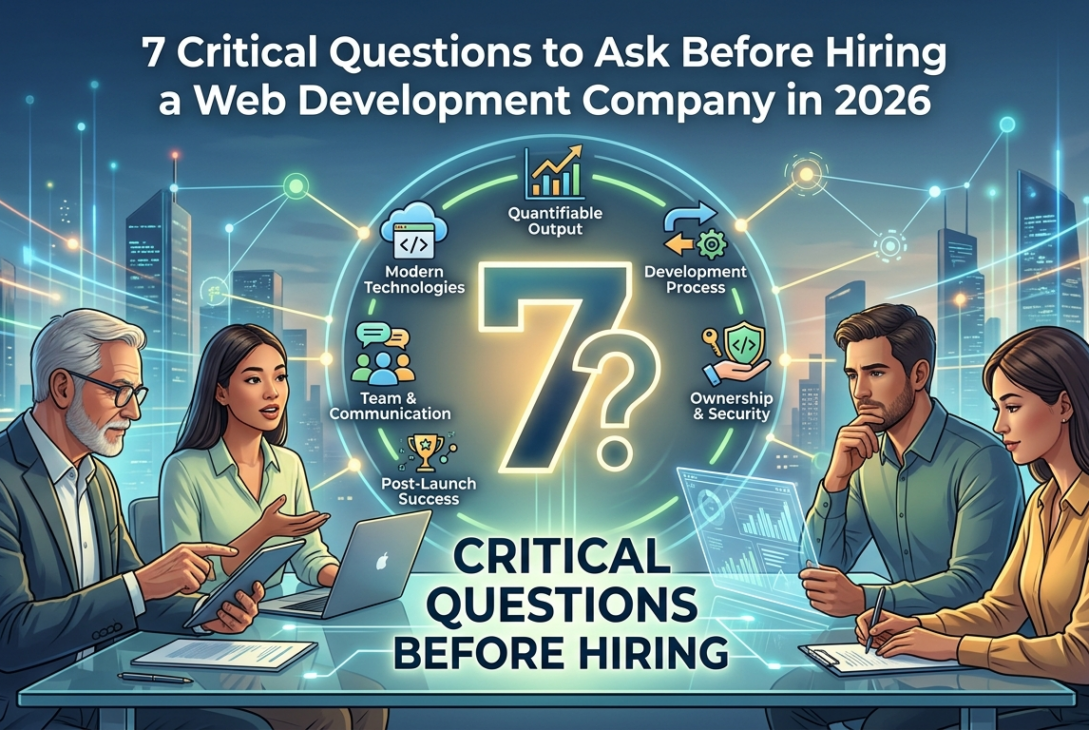
In 2026, the business world is going to have the highest expectations, as your website is the first sight they see of your business. Users require blistering-fast loading speeds, mobile-optimized experiences, and secure, personalized interactions. The decision about who to hire to develop your web presence can be the difference between your online presence driving expansion or your company falling behind in technology and performance. In the era of AI tools, no-code platforms, and dynamically evolving web standards, it is imperative to ask the right questions before committing to a contract. Below are the seven crucial questions that can assist you in screening potential partner(s) and prevent expensive mistakes.
1. How experienced are you with Modern Web Technologies?
Web development is a fast-changing field. The frameworks, performance standards, and user expectations shift nearly every year. An organization must have a development partner that is fluent with current frameworks, headless content systems, and scalable architectures. Request to view recent projects that reflect proficiency in modern technologies like server-side rendering, router-generated sites, and progressive web apps. These methods enhance speed, search visibility, and scalability over time. When a firm depends on outdated libraries or templates, it may indicate a low level of technical expertise. An effective team must also know how to combine AI-powered features, APIs, and personalization tools without affecting performance or security.
2. Are You Able to Give Me Quantifiable Output of Your Previous Projects?
The design is good, but the business performance is better. In portfolios, do not just look at pictures—demand actual performance data. Performance metrics such as faster page load times, lower bounce rates, higher conversions, or improved search rankings demonstrate whether a development partner understands technology’s impact on business outcomes. Ask for case studies in which clients describe their initial challenges, the technical solutions implemented, and quantifiable outcomes following launch. Companies unable to provide measurable improvements may lack the analytical mindset needed to build high-performing digital platforms.
3. How Do You Develop Your Products Up Until Launch?
One of the most reliable signs of a professional team is a structured, clear development process. Before committing, ask how the project transitions from discovery and planning to design, development, testing, and deployment. Look for teams practicing agile methodologies, dividing work into manageable sprints, and reporting progress regularly. This approach provides early feedback, minimizes confusion, and ensures the final product meets your objectives. A conspicuous workflow also helps prevent delays and cost increases. If a provider cannot describe their process or provides unrealistically short deadlines for complex projects, this is a warning sign.
4. Who Owns the Digital Asset and Code After Launch?
Ownership is one of the most ignored yet critical aspects of web development contracts. Some companies retain ownership of source code, hosting, or design files, making it difficult for clients to switch vendors or scale their websites. Ensure that when the project is finished, you have full access to all source code, design assets, and administrative accounts. A reliable partner will include documentation, repository access, and a well-defined handoff process. This ensures long-term control over your digital infrastructure and prevents dependency on proprietary systems or costly renewal contracts.
5. What Do You Do About Security, Performance, and Compliance?
Information privacy and cybersecurity threats are major concerns for businesses of all sizes. A professional development partner should provide secure coding practices, data encryption, and periodic vulnerability testing. Ask how they handle common security threats, manage user data, and comply with relevant privacy standards. Discuss performance optimization strategies such as image compression, caching, and content delivery networks to ensure fast loading even during peak traffic. Emphasis on security and performance indicates a team that understands the long-term obligations of maintaining a publicly-facing digital platform.
6. How does your team structure and Communication Work?
Effective communication can make or break a project. Knowing who will be engaged in your project and how they will collaborate helps establish expectations early. Inquire whether you will have a dedicated project manager and how frequently updates will be provided. Frequent meetings, joint project dashboards, and open communication channels ensure problems are resolved promptly. Also, consider the team’s expertise. A diverse team of designers, front-end developers, back-end experts, and QA specialists tends to outperform a single generalist who handles all tasks.
7. What Will You Measure as Success Once the Website Is Online?
The relationship should not end with the website launch; it should mark the beginning of continuous monitoring, improvement, and growth. Before contracting with a development partner, ask which metrics they use to gauge post-launch success and how they track performance. Metrics may include page load times, user behavior, conversions, and areas for feature improvement. Some teams provide maintenance services such as performance audits, security updates, and technical support. Select partners committed to your site’s ongoing performance to ensure it continues to meet your business objectives and evolving technology standards.
5 Pitfalls to Avoid When Hiring
- Skipping Due Diligence – Falling in love with low quotes, flashy presentations, or imprecise proposals can lead to costly redesigns.
- Unrealistic Delivery Schedules – Beware of suppliers promising quick completion for complex projects.
- Overreliance on Off-the-Shelf Solutions – Templates and no-code systems may be insufficient for scalable, evolving businesses.
- Neglecting Technical Documentation – Failure to review documentation can result in long-term operational challenges.
- Ignoring Key Questions – Not asking about ownership, maintenance, or security exposes you to risk.
Frequently Asked Questions
Q: What is the average time for professional web building?
A: Timeline depends on complexity. Simple sites may take a few weeks, while custom platforms or e-commerce sites may require several months to develop, plan, and test.
Q: Should I hire a freelancer or a development agency?
A: Small, simple projects may be suitable for freelancers. Complex or large-scale websites benefit from the experience and structured processes of agencies.
Q: What should be included in a web development contract?
A: Include scope of work, schedules, payment milestones, ownership rights, maintenance terms, and processes for revisions.
Q: What is the budget for a new site?
A: Costs depend on features, integrations, and design complexity. Investing in quality often saves money in the long term compared to cheap, low-quality options.
Q: Should I continue maintaining my site after launch?
A: Yes. Websites require updates, security patches, and performance monitoring to remain safe and functional.
Creating a Digital Platform for Long-Term Growth
Choosing a development partner should not be about launching a website alone—it’s about building a digital base that supports marketing, customer communication, and future innovations. By asking the right questions and assessing technical skills, transparency, and long-term support, you can select a partner capable of delivering a secure, scalable, and high-performing platform aligned with your business objectives.