Timing is everything when it comes to deep-sea fishing in Stuart, Florida. As always, right along the mighty Gulf Stream and the Treasure Coast, it is either fishing year-round, but some months are better suited to various species and conditions. Being aware of seasonal patterns, water temperatures, and when fish migrate means you can plan more fruitful and fun outings. This guide provides a month-by-month breakdown of what to expect, so you can fish smarter and catch more fish.
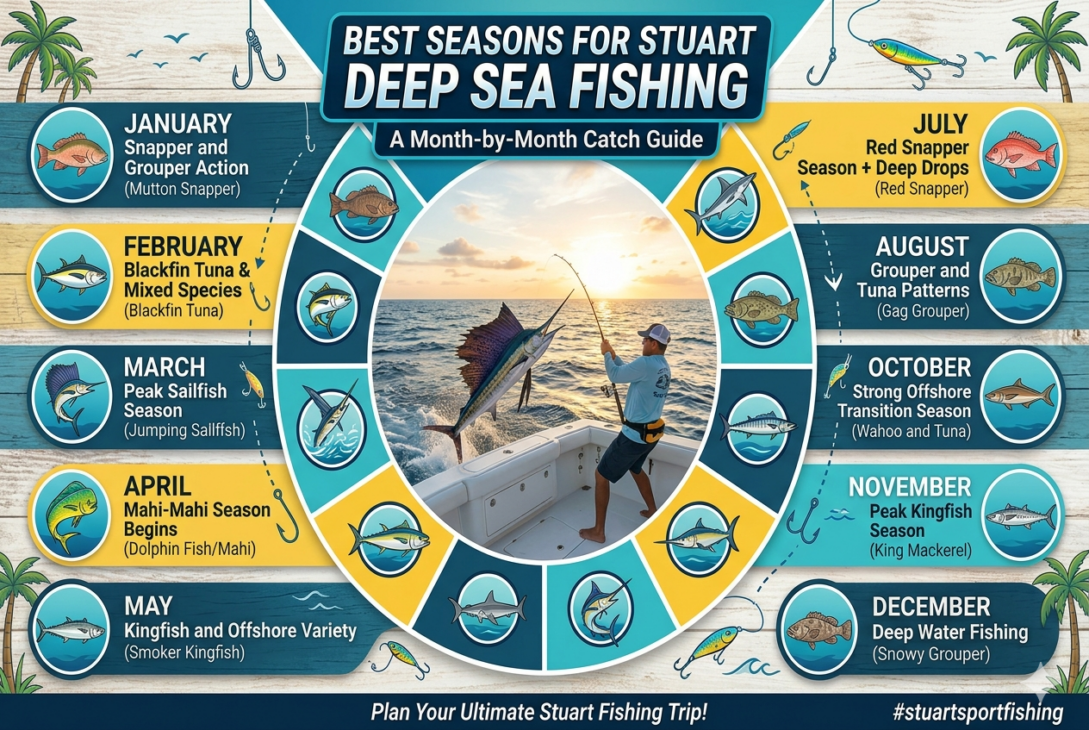
January: Snapper and Grouper Action
Clear waters and consistent action on nearshore wrecks can be expected in January. Gag grouper and mangrove snapper are prevalent in the 68–72°F range; similarly, trolling around offshore edges may yield the occasional sailfish catch. Mornings can be chilly, so dress accordingly, but most days are warm by the afternoon—a perfect time for a beginner or family trip.
February: Blackfin tuna & Mixed Species
Blackfin tuna begin to bite more offshore, 20–40 miles out. Cedar plugs trolled early in the morning can be rewarding. Bottom fishing continues to put vermilion snapper in the cooler, and kingfish are beginning to show up more consistently. When the waters warm to about 74°F, sailfish awaken, which is why this is an exceptional month for variety among anglers.
March: Peak Sailfish Season
Sailfish March is one of the best months for sailfish. It often results in very productive days of kite fishing with live bait in the Gulf Stream. Cobia will be near wrecks, and Spanish mackerel will be near the surface. Good weather after cold fronts produces stable conditions, leading to calm seas and great fishing. Head it is, a perfect window for landing trophy species.
April: Mahi-Mahi Season Begins
Offshore, the mahi-mahi (dolphin fish) season opens in April. They are often found on weed lines and floating debris and can be up to 50 miles offshore. Grouper are still biting around the reefs, as well as wahoo. Step 4: Focus on Sargassum Weed Lines — These lines are prime targets, as they are hot spots that attract baitfish and larger predators. Every October is among the more exciting months to fish offshore.
May: Kingfish and Offshore Variety
The larger kingfish — the so-called “smokers” between 30 and 50 pounds — start rolling into town throughout May. One particularly high-producing spot is live bait fishing near the inlet. Offshore, mahi-mahi are still plenty active, and tarpon are starting to show themselves off the beach. Full-day excursions are recommended because of the diverse range of activities and angling opportunities. A very low water temperature of 78°F will also encourage levels of activity.
June: Sharks and Billfish Opportunities
June sees more active sharks, such as bull sharks, makos, and hammerheads, as water temperatures reach around 82°F. Blue marlin can also be found, but more so farther offshore, making trips often very productive for these anglers. Snapper fishing continues to produce, and all of my trips have been early morning to avoid any storms that may affect the afternoon. With hard-fighting fish and multiple species available, this is definitely a month for anglers looking for variety and some exciting action.
July: Snapper Season + Deep Drops
Red snapper season is on the calendar in July, and so are excellent deep drops around the 200-foot mark. Amberjack hang around wrecks, so they get some pressure, and nighttime sword trips are a little more common. We suggest leaving earlier due to the summer heat. In terms of bottom fishing, or chasing big fish, this month is as good as it gets.
August: Grouper and Tuna Patterns
On deep ledges (around 120 ft or so), gag and scamp grouper are the species that usually dominate in August. Offshore blackfin tuna remain on their summer patterns, while the occasional mahi-mahi may show up. One should monitor the forecasts as the weather is highly unpredictable. It is perhaps the steadier month for some reef fishing, although not quite as high-paced as spring.
September: Cobia and Transition Season
September marks a seasonal transition. Cobia are found inshore and around structure (often eating crabs). You can find bull redfish along the beaches while kingfish return to the offshore in greater numbers. With the recent cooling of water temperatures, overall fishing activity has improved. This is a great month for fishermen seeking a mix of inshore and offshore species.
October: Strong Offshore Variety
We typically see a mix of species in October, including mahi-mahi, wahoo, blackfin tuna, and sailfish. The typically calm conditions paired with water temperatures around 80°F make both half- and full-day charters great choices this August. You can catch up to 6 species on a good day, and offshore fishing is especially productive.
November: Peak Kingfish Season
Fall bait runs in November produce some outstanding king mackerel action. Grouper are beginning to head back towards the reefs, and sailfish are still biting well offshore. A dependable month for great catches and ideal for a day or two on the water without extreme weather conditions.
December: Deep Water Fishing
Some excellent deep-water species, such as snowy grouper and lane snapper, are available in December. The sailfish certainly slow down this time of year, but if you can bottom fish, it has been good. The waters are less busy, making this the perfect time of year for anglers seeking a more sedate experience.
Your Stuart Fishing Action Plan
Half-Day (4 Hours): Ideal for nearshore reefs and snapper.
Full-Day (8 hours): Recommended for Offshore Species like mahi-mahi, tuna, and sailfish.
Tip for Booking: In peak months, book your trips 60+ days in advance.
WHAT TO BRING: Anti-seasickness drugs, polarized shades, sunscreen, and a cooler for your catch.
Why Seasonal Trends Matter
Fish migration, water temperature, and bait movement are key factors in sustaining a successful angling venture. Temperature and ocean currents drive pelagic species like mahi-mahi, tuna, and sailfish away from the vast open waters of their environment, and toward shallow coastal regions; structures such as reefs are key to the survival of bottom-dwelling species (grouper, snapper, etc.). By using these patterns, you can plan your trip to match the targeted species at the right time.
Frequently Asked Questions
The highest number of individuals will join the local line this month, comparable to other months of deep-sea fishing when anglers can book charters.
The peak months for productivity are normally March and April, when numerous species are active, and conditions are good.
Question: Can you go deep-sea fishing all year round?
Indeed, fishing is productive year-round and varies by season.
How far out should you be?
Reef species are typically caught just a coupla miles offshore, while pelagic species require a better 20–50 miles out.
Is summer fishing too hot?
Despite some hot days, early morning outings and taking coastal breezes well offshore make conditions manageable. Most larger species are at their most active in the hotter months.
What should beginners bring?
While plenty of charters provide the equipment you need, it’s recommended to bring sunglasses, sunscreen, motion sickness medication, and a cooler.
Make The Most Out of Your Trip by Planning It Well
Fishing is as much about timing as it is about talent. The time of year can mean the difference between catching quality fish and not catching at all, so be sure to plan your trip accordingly for seasonal patterns and peak activity periods. After all, known finding fish in hot water is often dependent not only on the species being sought after – fast or slow, pelagic or reef dwelling – but even the month of the year it is.