If you own a waterfront home in Michigan . whether it’s a cozy cottage on one of the state’s 11,000+ inland lakes or a full-time residence along the shores of Lake Michigan you already know you’re sitting on something special. Waterfront property Improvements in Michigan is finite. There’s only so much shoreline to go around, and that scarcity is exactly what keeps these properties holding their value even when the broader real estate market cools off.
But here’s the thing: owning waterfront isn’t enough on its own. How you improve and expand your property can make a significant difference in what it’s worth and how much joy you get out of it while you’re there. A well-planned home addition can transform a dated lake cottage into a year-round luxury retreat, and it can add serious equity in the process.
So if you’ve been thinking about adding on to your Northern Michigan waterfront home, this guide is for you.
Why Home Additions Matter More on Waterfront Properties
When buyers shop for lakefront homes in Michigan, they’re not just buying square footage they’re buying a lifestyle. And lifestyle homes command lifestyle prices. A well-executed addition that enhances the way a family experiences the water, entertains guests, or simply relaxes on a Saturday morning can dramatically shift your home’s appeal and market value.
Waterfront sales in Grand Traverse County alone are up nearly 29% year over year, even as broader home values have stabilized. Buyers are active and motivated but they’re also picky. They want homes that feel updated, functional, and built to last. If your waterfront property is still stuck in 1995, an addition isn’t just a nice idea. It might be exactly what separates a quick sale at top dollar from a listing that sits.
Start Here: Know the Rules Before You Build
Before you fall in love with a floor plan, spend some time understanding what you’re actually allowed to build. Michigan waterfront properties come with a unique set of regulations that don’t apply to inland homes.
The Michigan Department of Natural Resources (DNR) and local zoning ordinances both play a role in what you can build and how close to the water you can build it. Many lakefront lots have setback requirements meaning your addition must sit a certain distance from the shoreline. Some properties near rivers or protected waterways also fall under the Michigan Natural Rivers Act, which restricts clearing, building, and even landscaping near the water’s edge.
The smartest first step is to contact your local municipality and a licensed general contractor who has experience with waterfront builds. They’ll help you understand what’s possible before you invest time and money into plans that can’t get permitted.

The Home Additions That Add the Most Value on Michigan Waterfront Properties
1. Four-Season Sunroom or Great Room Addition
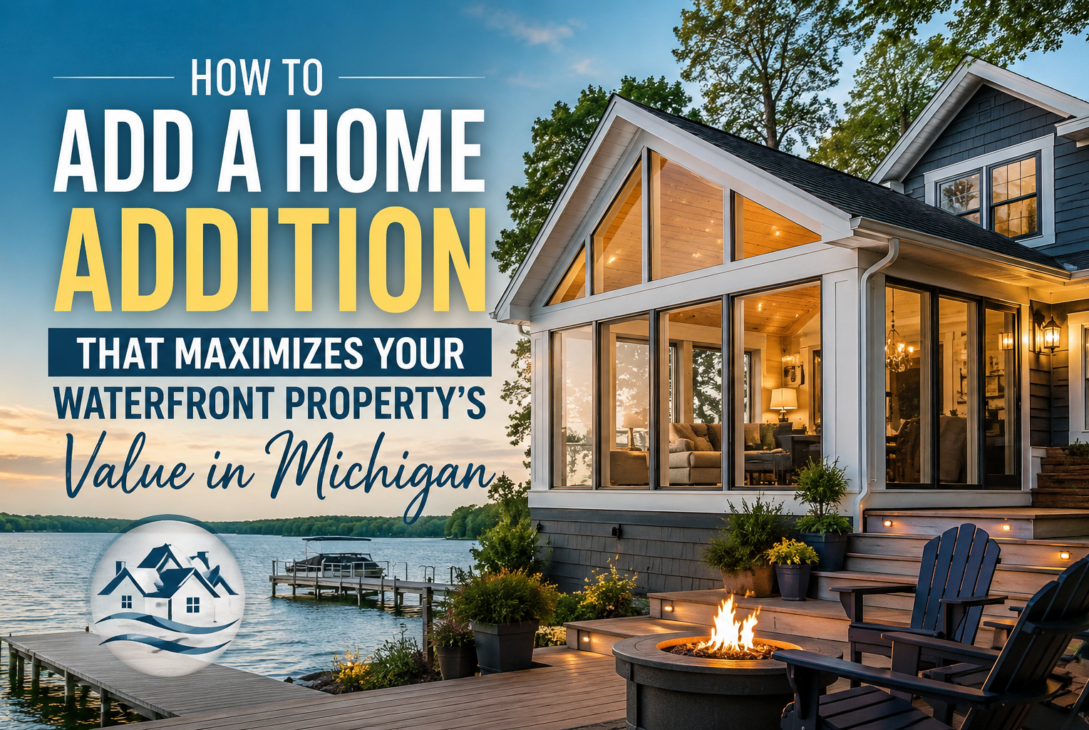
One of the most consistently high-value additions you can make to a Michigan lakefront home is expanding your main living area with a sunroom, great room, or open-concept living and dining space that faces the water.
Why does this work so well? Because Michigan’s outdoor season is short. You’ve got a few glorious months of summer, and then the temperatures drop. A four-season sunroom lets homeowners enjoy those lake views in January just as much as July. Floor-to-ceiling windows, radiant floor heating, and durable materials that stand up to moisture and cold all come into play here.
Buyers love this kind of addition because it extends the usable season of the home without sacrificing the view. And in a market where four-season usability is increasingly driving lakefront purchase decisions, it’s a smart long-term investment.
2. Deck, Screened Porch, or Outdoor Living Addition
Outdoor kitchens can deliver anywhere from 55% to 200% return on investment on a waterfront home because buyers can easily picture themselves entertaining outside. Add a screened porch or a multi-tiered composite deck into the mix and you’re creating an outdoor living experience that feels like a resort.
For Michigan waterfront homes, the goal is to blur the line between inside and outside. Large sliding or folding glass doors that open to a deck, a built-in grill area, a pergola, or even a covered porch that looks directly out over the water these details are what push a listing from “nice” to “I have to have this.”
Keep material choices practical, too. Composite decking holds up beautifully in Michigan’s wet, freeze-thaw climate and requires far less maintenance than traditional wood. Fiber-cement siding for any covered structures also performs well in the damp lakefront environment.
3. Primary Suite Addition
If your waterfront cottage has two small bedrooms and a single bathroom, adding a proper primary suite with a spacious bedroom, walk-in closet, and en-suite bathroom can completely change how your home competes in the market.
Buyers looking at waterfront properties above the $500,000 mark increasingly expect a main-floor primary suite or at minimum a well-appointed master bedroom with a private bath. Features like a soaking tub positioned for lake views, a walk-in tile shower, and good natural light hit all the right notes in 2026.
This type of addition also improves your home’s livability if you plan to age in place, which is a growing consideration for Northern Michigan property owners who want to enjoy their lakefront home for decades.
4. Bonus Room or Bunkhouse Addition
Waterfront homes are gathering places. Families come for weekends, friends pile in during the summer, and multi-generational groups want room to spread out without stepping on each other. A bonus room addition — whether it’s a dedicated bunkroom above a garage, a finished walkout basement, or a detached guest suite adds sleeping and living capacity that directly translates to value.
Buyers evaluating waterfront vacation homes do the math: how many people can we comfortably sleep here? If your home maxes out at six guests, adding a bunkhouse or bonus room that pushes that number to ten can meaningfully widen your buyer pool.
5. Garage or Boathouse Addition
On a waterfront property, storage isn’t glamorous but it’s extremely practical and often overlooked. Buyers want somewhere to store boats, kayaks, paddleboards, snowmobiles, and all the gear that comes with lakefront living.
A two-car garage with an attached workshop or a boathouse addition serves double duty: it adds square footage to your property and solves a real logistical problem for buyers. A private dock paired with proper boat storage can increase a property’s value by 5–15% depending on location and size. That’s not small change on a $600,000 or $800,000 property.
Tips for Getting the Most Out of Your Addition
Match the architecture. An addition that looks tacked on does more harm than good. Work with a builder who understands how to blend new construction seamlessly with your existing home’s style and materials.
Prioritize the view. On a waterfront property, every addition should either preserve or enhance sightlines to the water. Don’t build something that blocks the thing that makes your property valuable in the first place.
Use durable, low-maintenance materials. Michigan’s climate is hard on homes. Moisture, UV exposure, freeze-thaw cycles waterfront properties take a beating. Choose materials that hold up: fiber-cement siding, composite decking, quality windows with good moisture ratings, and proper insulation.
Work with a licensed local contractor. This isn’t a place to cut corners. A contractor with deep experience in Northern Michigan waterfront construction understands the permitting landscape, the climate demands, and the specific challenges of building near water.
Frequently Asked Questions
How much does a home addition cost on a Michigan waterfront property? Costs vary significantly based on size, materials, and complexity, but in Northern Michigan you can generally expect to budget between $150 and $350+ per square foot for quality new construction. Waterfront projects often run toward the higher end due to site access challenges and the need for durable materials.
Do I need a permit for a home addition near water in Michigan? Yes, in virtually all cases. Waterfront additions typically require permits from your local municipality and may also require review by the Michigan DNR depending on proximity to the shoreline. Always work with a licensed contractor who can navigate this process for you.
What type of home addition adds the most value to a lakefront property? Outdoor living additions — decks, screened porches, and outdoor kitchens consistently deliver strong ROI on waterfront homes. Four-season sunrooms and primary suite additions are also high performers, particularly for buyers looking for year-round usability.
How close to the water can I build in Michigan? Setback requirements vary by municipality and waterway type, but many Michigan lakefront properties have setbacks ranging from 25 to 75 feet from the ordinary high-water mark. Your local zoning office or a licensed waterfront contractor Near Me can clarify what applies to your specific lot.
Will a home addition affect my waterfront property taxes in Michigan? Generally yes any addition that increases square footage or assessed value will be reflected in your tax assessment over time. However, the equity gained typically far outweighs the incremental tax increase for well-planned waterfront additions.
Should I add on or build new on a waterfront lot? This depends on the condition of your existing structure and how restrictive your lot’s zoning is. Adding on to an existing home often preserves grandfathered setback rights that a complete tear-down and rebuild might not. A local contractor and real estate professional familiar with waterfront properties can help you make this call.

Final Thoughts
Your Michigan waterfront property is one of the most valuable assets you own not just financially, but in terms of the memories and experiences it creates. A thoughtfully planned home addition isn’t just a real estate strategy. It’s an investment in how you live.
The key is to work with experienced professionals who know the Northern Michigan market, understand waterfront permitting, and build with the kind of craftsmanship that holds up for generations. Do that, and your addition won’t just add square footage it’ll add genuine, lasting value to one of Michigan’s most treasured lifestyle investments.