You just walked out of the dental clinic with a dazzling, picture-perfect smile. Or maybe you finished a two-week at-home whitening kit and finally feel confident showing your teeth. Either way, a natural question follows: how long is this going to last?
The truth is, cosmetic teeth whitening is not a one-and-done solution. Your results can fade in as little as a few weeks or hold strong for several years, and the difference often comes down to the method you chose and the habits you maintain afterward.
This guide breaks down exactly how long each whitening method lasts, what causes staining to creep back, and the most effective strategies to protect your investment and keep your smile radiant for as long as possible.
How Long Does Cosmetic Teeth Whitening Last?
On average, professional teeth whitening results last anywhere from 6 months to 3 years. That is a wide range, and for good reason. The longevity of your results depends heavily on the whitening method used, the natural shade of your teeth, and your day-to-day lifestyle choices.
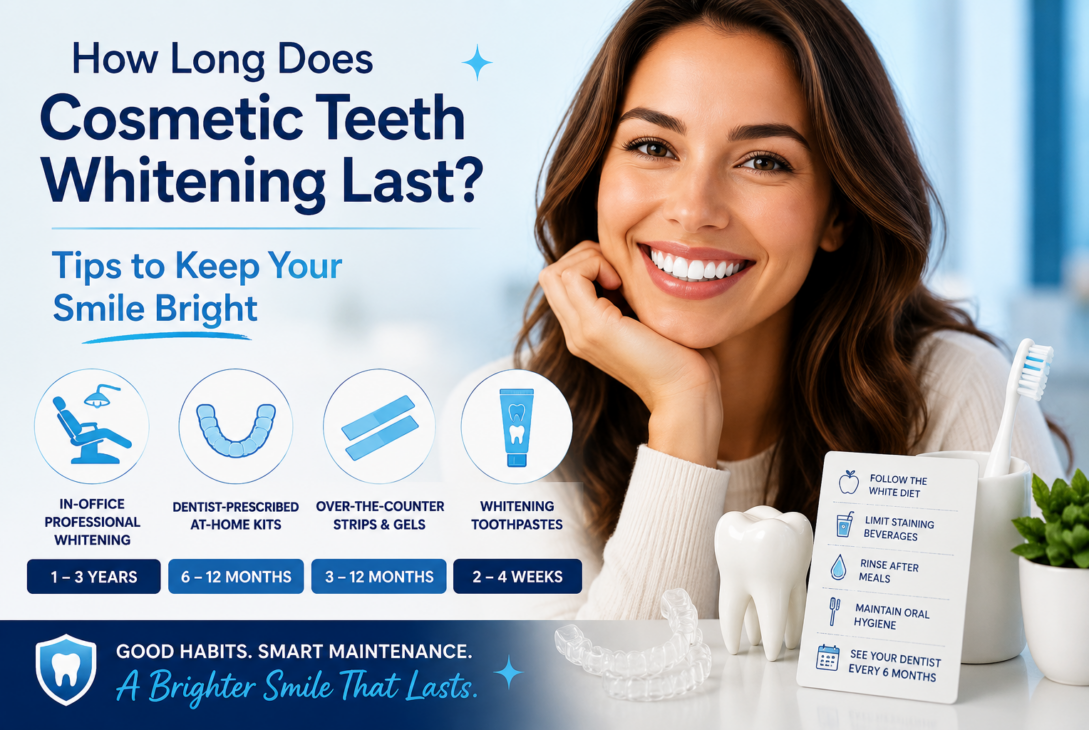
Here is a clear breakdown by treatment type so you know what to expect:
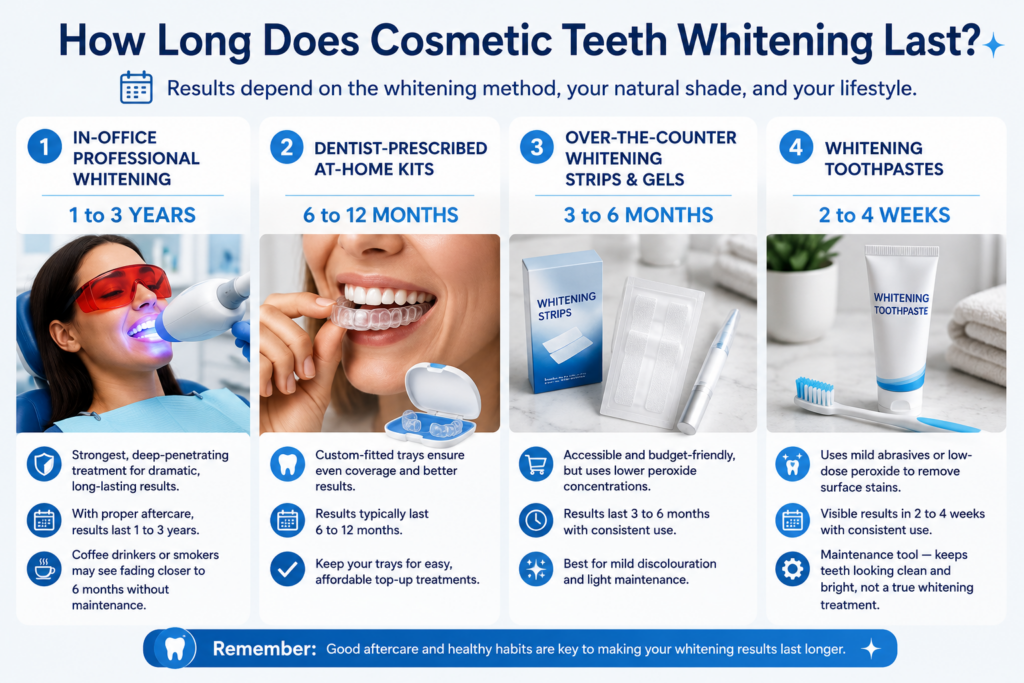
1. In-Office Professional Whitening: 1 to 3 Years
In-office treatments, such as laser whitening or light-activated bleaching, use high-concentration peroxide gels applied directly by a dentist. Because the concentration is far stronger than anything available over the counter, these treatments penetrate deeper into enamel and deliver the most dramatic, long-lasting results.
With proper aftercare, in-office cosmetic teeth whitening can maintain its results for 1 to 3 years. However, regular coffee drinkers or smokers may notice fading closer to the 6-month mark without maintenance.
2. Dentist-Prescribed At-Home Kits: 6 to 12 Months
Custom-fitted whitening trays provided by your dentist offer a middle ground between convenience and effectiveness. You apply a professional-grade gel at home over a period of one to two weeks. Because the trays are molded to your teeth, they ensure full, even coverage that generic kits simply cannot match.
Results typically last 6 to 12 months. The advantage here is that you keep the trays, so top-up treatments are quick, affordable, and highly effective.
3. Over-the-Counter Whitening Strips and Gels: 3 to 6 Months
Pharmacy whitening strips and gel pens are accessible and budget-friendly, but they use lower peroxide concentrations than professional treatments. This means results are more surface-level and tend to fade faster.
You can generally expect 3 to 6 months of noticeably brighter teeth with consistent use. They work best for mild discolouration and are a popular choice for light maintenance between professional sessions.
4. Whitening Toothpastes: 2 to 4 Weeks
Whitening toothpastes work by using mild abrasives or low-dose hydrogen peroxide to polish away surface stains. They do not change your tooth’s natural shade, they simply keep it from looking dull.
Any brightening effect lasts only as long as you use the product consistently, typically showing visible results within 2 to 4 weeks. Think of them as maintenance tools rather than whitening treatments in their own right.
What Causes Whitening to Fade?
Understanding why teeth yellow again is just as important as knowing how to whiten them. Staining occurs when chromogens, deeply pigmented molecules found in food and drink, bind to tooth enamel over time. Several habits dramatically accelerate this process:
- Coffee, tea, and red wine — among the most common culprits due to their high tannin content.
- Tobacco use — both smoking and chewing tobacco cause deep, stubborn staining that is notoriously difficult to reverse.
- Dark sauces and berries — soy sauce, balsamic vinegar, blueberries, and pomegranates are all highly pigmented.
- Acidic foods and drinks — weaken enamel, making teeth more porous and susceptible to staining.
- Poor oral hygiene — plaque buildup creates a surface for stains to adhere to far more easily.
Tips to Keep Your Smile Bright After Cosmetic Teeth Whitening
The good news? A few simple, consistent habits can dramatically extend the life of your whitening results. Here is what dental professionals recommend:
Follow the 48-Hour White Diet After Treatment
In the first 48 hours after a whitening treatment, your enamel pores are temporarily more open and far more susceptible to picking up new stains. Stick to light-coloured foods during this window: chicken, white rice, pasta with cream-based sauces, cauliflower, and white fish. Avoid anything that would stain a white shirt. This single habit can make a meaningful difference in how long your results last.
Limit Staining Beverages — or Drink Through a Straw
You do not have to give up your morning coffee entirely. However, reducing your intake of coffee, black tea, red wine, and dark sodas will significantly slow the re-staining process. When you do drink these beverages, use a reusable straw to minimise direct contact with your front teeth. It is a small adjustment that adds up to a big difference over months of consistent use.
Rinse Your Mouth After Meals
If brushing after every meal is not practical, rinsing your mouth with water for 30 seconds is the next best thing. This simple step removes food pigments and residual acids before they have a chance to settle on your enamel. Make it a post-meal reflex and your teeth will thank you in the long run.
Maintain a Consistent Oral Hygiene Routine
Brush at least twice a day using a soft-bristled toothbrush and a fluoride toothpaste. Floss once daily to remove interdental plaque, the kind that regular brushing cannot reach. Plaque creates a rough surface that traps staining compounds, so keeping it under control directly protects your whitening results. Consider adding an antibacterial mouthwash to your routine for an extra layer of protection.
Schedule Professional Cleanings Every 6 Months
Your dentist or hygienist removes tartar and surface stains that no at-home product can tackle. Booking a professional clean every 6 months does not just protect your oral health, it actively refreshes the brightness of your smile. Pair your cleaning appointment with a review of your whitening maintenance plan to stay on track.
Use Touch-Up Trays to Refresh Your Shade
If your dentist provided custom whitening trays, use them for periodic touch-ups every 6 to 12 months. A single overnight session or a few evenings of use is often enough to bring your smile back to its target shade. This is far more cost-effective than starting a full treatment cycle from scratch and keeps your results consistently bright year-round.
Is Cosmetic Teeth Whitening Right for You?
Teeth whitening works best on surface stains caused by food, drink, and ageing. It is not effective on intrinsic stains caused by certain medications, trauma, or excessive fluoride exposure. It also does not change the colour of crowns, veneers, or dental bonding.
Before beginning any whitening treatment, consult your dentist. They can assess whether your teeth and gums are healthy enough for whitening, identify the type of staining you have, and recommend the most appropriate and cost-effective treatment for your specific situation.
Final Thoughts: Your Bright Smile Is Worth the Effort
Cosmetic teeth whitening can genuinely transform your confidence, but the results are not permanent. In-office treatments can last 1 to 3 years, dentist-prescribed home kits 6 to 12 months, and over-the-counter products 3 to 6 months. The variable that makes the biggest difference is not just the treatment you choose, it is how consistently you look after your smile afterward.
Avoid heavy staining foods and drinks right after treatment, stick to good oral hygiene habits, rinse after meals, and schedule regular professional cleanings. These are not complicated steps, but they compound powerfully over time.