If you are heading out for a fishing trip, one of your first decisions will be whether to run offshore on an offshore charter or stay closer to home on a reef fishing trip. At first glance, both options look similar: boating, fishing gear, and something to reel in. Yet, the experience you receive from each is markedly different.
Selecting your ideal trip is not as simple as just selecting a fishing package. How does the experience stack up to your goals, budget, and skill level, as well as other types of fish you hope to catch? Knowing the differences helps you make sure your day on the water provides exactly what you’re after.
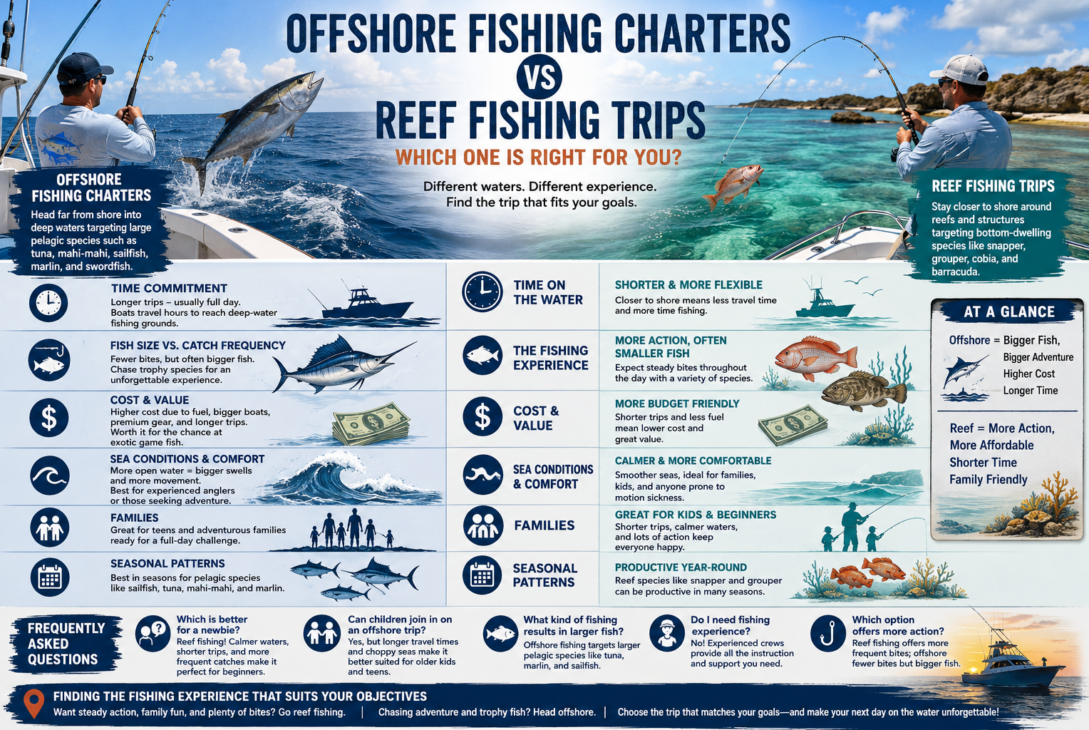
The Difference Between Offshore vs Reef Fishing
The main difference is location and targeted species.
Offshore Fishing Charters:
These charters take you away from the shore out into deeper waters, usually hundreds or thousands of feet deep. These tours focus on large pelagic species that inhabit open-ocean waters, such as tuna, mahi-mahi, sailfish, marlin, and swordfish.
Reef Fishing:
Reef fishing, however, occurs much closer to shore around underwater structures, reefs, and ledges. The habitats provide a home to many bottom-dwelling fish species, such as snapper, grouper, cobia, and barracuda.
While offshore fishing might be better described as hunting ocean predators, reef fishing is more akin to sifting through a busy reef community with plenty of action.
The Difference in Time Commitment
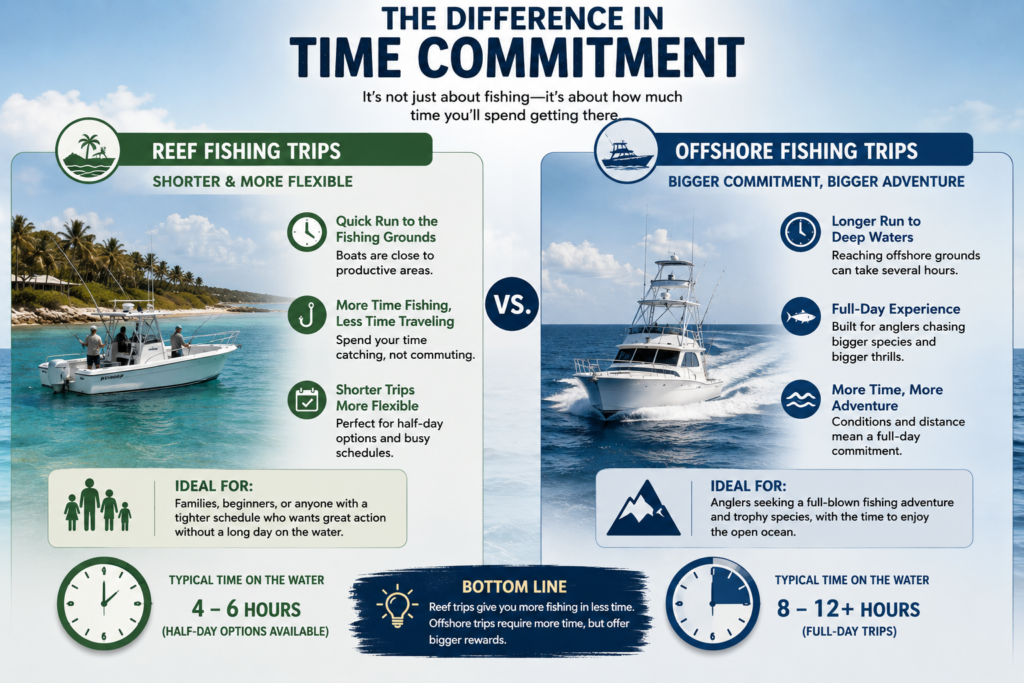
The most obvious difference between these two experiences is the amount of time you’d have on the water.
What are reef fishing trips like? Then there are reef fishing trips, which tend to be a little shorter and more flexible. However, because the fishing grounds are relatively close together, it rarely takes boats long to get to productive areas. Anglers can spend more time fishing and less time on the road.
Deep-sea trips are pretty much a bigger commitment for everyone. Conditions and the targeted species can push reaching offshore waters several hours out. They are generally full-day tours tailored for anglers seeking a bit more adventure.
Reef Fishing: For those on a tighter schedule or families who prefer not to be out for too long, this is a more practical option. Offshore trips may appeal more to those looking for a full-blown fishing trip.
Fish Size Versus Catch Frequency
Another thing is the type of fishing experience you want.
The reef provides for more regular catches. Fish have a natural tendency to hang out around these underwater structures, resulting in plenty of action for anglers throughout the day. The fish might not average as big, but the constant bites keep you on your toes.
Offshore trips are less about quantity and more about quality. This might take longer as anglers seek other waterways, but the payoff may be literally huge. Most of the time it takes some great skill, patience, and fortitude to land such a big fish as a tuna, sailfish, or marlin, and there certainly is nothing more memorable than hooking up on those.
If you want a good chance of taking some fish home for dinner and of having regular action, reef fishing is often a better option. But if you want a trophy fish and a story you’ll tell for years to come, deep-water fishing takes the cake.
Considering Cost and Value
Another essential point when selecting the two fishing styles is your budget.
Reef fishing journeys tend to be less than $50 or business credit, provided that you do not need to travel very far to catch any fish, and you want fewer times in the water, as they are normally limited to a distance from land.
Most offshore excursions will require larger boats, use more fuel, require higher-quality equipment, and require longer-duration trips. And that adds up to a much higher total price.
Offshore fishing typically requires more of an investment, but the opportunity for exotic game fish is enough to warrant the additional expense for most anglers.
In the end, it depends on what kind of experience you are seeking, so use this as a guide to value.
Sea Conditions and Comfort Levels
If you are a first-time angler, comfort may be an important factor in the experience.
Most of the time, reef fishing is performed at depths where wave action is much less intermittent. This makes it ideal for families, children, and those who suffer from motion sickness.
Offshore waters are often much more turbulent, particularly as conditions change. We all know this: the farther offshore a boat sails, the larger the swells and the increased motion.
However, if you’re not sure you’d be comfortable in open-ocean conditions while fishing from a boat, the reef trip is an excellent way to ease into things.
What Is The Better Choice For Families
This makes it easy to get kids or inexperienced family members involved in the sport, which is why reef fishing can sometimes be a very appealing pursuit for families.
Most youngsters like regular catches, and shorter trip lengths help them stay attentive throughout the day. The calmer seas, in addition, are less likely to cause any discomfort or even vertigo.
For families, offshore fishing can be lots of fun, too, and it includes teenagers eager for the challenge of chasing bigger species. But not every group may want to deal with the longer travel times and more strenuous conditions.
When planning it as a family trip, you must take into account everyone’s comfort level and expectations.
Seasonal Fishing Patterns
When you are travelling, the trip can also determine which one is most effective.
And some seasons simply lend themselves to ideal hot-weather offshore species like sailfish, tuna, mahi-mahi, and marlin. These slots can make deep-sea excursions some of the best trophy Cinner fishing that you will do.
At other times of the year, reef systems can be intensely productive and often bring desirable species, such as snapper and grouper, into the mix.
What style of fishing is likely to be most productive under the present conditions and corresponding current seasonal migratory patterns that an experienced captain could advise?
Frequently Asked Questions
Which is better for a newbie: reef fishing?
Yes. Because reef fishing takes place in calmer waters, shorter trips are warranted, catches are often more numerous, and the fish tend to be smaller, it is considered an excellent category for novice anglers to engage in.
Can children join in on an offshore fishing trip?
All offshore trips are designed to suit families but can involve longer travel times or choppy seas, and may therefore be better suited to older children and teenagers.
What kind of fishing results in larger fish?
Deep-water fishing usually focuses on larger pelagic species, such as tuna, marlin, and sailfish; hence, it is often a favorite among trophy hunters.
Do I need fishing experience?
No. With experienced crews to instruct and support them, beginners can enjoy both reef and offshore trips.
Which option offers more action?
Reef fishing often gives a more regular run of smaller fish, whereas offshore fishing receives fewer bites but from larger fish.
Finding the Fishing Experience That Suits Your Objectives
The best fishing trip is always the one that suits what you want from it. Reef fishing is typically the best option for steady action and family-friendly fun, with plenty of chances to catch fish. If the thrill of adventure, larger challenges, and perhaps catching a trophy fish is calling you, then offshore may be just what you are looking for. Knowing how these fishing styles differ will help you feel confident booking your next trip and create an experience that meets your expectations before you ever leave the dock!