When choosing new windows or doors, many homeowners ask the same question: What is the difference between tempered glass and impact resistant glass? While both are considered safety glass and offer greater strength than standard annealed glass, they are designed for different purposes. Understanding their differences is essential, especially for homeowners living in hurricane-prone regions like South Florida.
If you’re planning a window replacement, building a new home, or preparing for hurricane season, knowing which type of glass provides the right level of protection can help you make an informed investment. This guide explains how tempered glass and impact resistant glass are made, how they perform, and which option is best for your home.
What Is Tempered Glass?
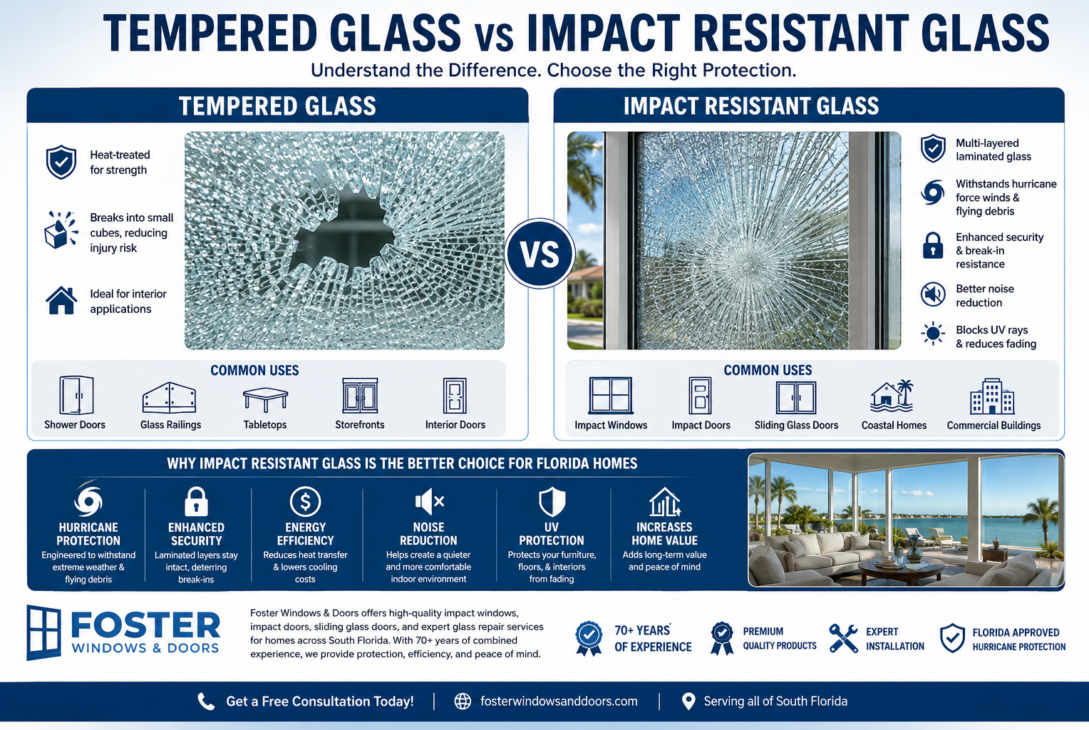
Tempered glass is a type of heat-treated safety glass manufactured by heating standard glass to extremely high temperatures and then rapidly cooling it. This thermal process makes the glass approximately four to five times stronger than ordinary glass.
One of the defining features of tempered glass is how it breaks. Instead of shattering into large, sharp pieces, it breaks into thousands of small, rounded fragments that are much less likely to cause serious injuries.
Because of its safety characteristics, tempered glass is commonly used in:
- Shower doors
- Glass railings
- Patio furniture
- Interior doors
- Commercial storefronts
- Tabletops
- Some residential windows
Tempered glass improves occupant safety but does not provide hurricane protection.
What Is Impact Resistant Glass?
Impact resistant glass, often called impact glass or hurricane impact glass, is specifically engineered to protect buildings from extreme weather conditions.
Unlike tempered glass, impact resistant glass consists of multiple layers of glass permanently bonded together with a durable laminated interlayer, usually made from polyvinyl butyral (PVB) or similar materials.
When struck by flying debris during hurricanes, the glass may crack, but the laminated interlayer holds the broken pieces together, preventing dangerous openings from forming.
This construction allows impact-resistant windows to continue protecting the building envelope even after significant impact.
Impact-resistant glass is commonly installed in:
- Hurricane impact windows
- Impact entry doors
- Sliding glass doors
- Coastal homes
- Commercial buildings
- High-rise condominiums
Tempered Glass vs. Impact Resistant Glass
Although both products improve safety, their performance differs significantly.
1. Strength
Tempered glass is stronger than ordinary glass under normal conditions.
Impact resistant glass combines multiple layers with laminated construction, making it far more resistant to hurricane debris and forced entry.
2. Breakage
Tempered glass shatters into small cubes.
Impact glass may crack upon impact, but the laminated layer keeps the glass intact, maintaining a protective barrier.
3. Hurricane Protection
Tempered glass is not designed for hurricane protection.
Impact resistant glass is specifically engineered and tested to withstand hurricane-force winds and windborne debris.
4. Security
Because tempered glass shatters completely after breaking, it can leave an opening.
Impact resistant glass remains largely intact, making unauthorized entry significantly more difficult.
5. Noise Reduction
Impact-resistant laminated glass provides noticeably better sound insulation than standard tempered glass.
Homes located near highways, airports, or busy neighborhoods often benefit from the additional acoustic protection.
6. UV Protection
Impact-resistant laminated glass blocks a significant amount of harmful ultraviolet rays.
This helps protect:
- Hardwood flooring
- Furniture
- Artwork
- Curtains
- Carpets
from premature fading.
Which Glass Is Better for Florida Homes?
For homeowners in Florida, especially coastal communities, impact resistant glass is usually the better investment.
Florida experiences:
- Hurricanes
- Tropical storms
- Flying debris
- High winds
- Heavy rain
Many areas also have strict building codes requiring impact-resistant windows or approved hurricane protection systems.
Impact windows not only improve safety but also offer year-round benefits including:
- Better insulation
- Increased home security
- Reduced outside noise
- Improved energy efficiency
- Lower maintenance
- Increased property value
Are Impact Windows Made with Tempered Glass?
Yes, many impact window systems actually incorporate tempered glass as one of their layers.
A typical impact window may include:
- Tempered exterior glass
- Laminated safety interlayer
- Heat-strengthened or tempered interior glass
This combination delivers superior performance that tempered glass alone cannot achieve.
Energy Efficiency Benefits
Modern impact windows frequently include advanced technologies such as:
- Low-E coatings
- Argon gas fills
- Insulated glass units
- Thermally efficient frames
These features reduce heat transfer, helping homeowners lower cooling costs while maintaining a comfortable indoor environment throughout the year.
Home Security Advantages
Burglars often target weak glass openings.
Impact-resistant glass provides an additional layer of protection because even after repeated blows, the laminated interlayer remains intact.
This added resistance gives homeowners valuable time during attempted break-ins while protecting occupants inside the home.
Insurance Benefits
Many insurance companies recognize the additional protection offered by impact windows.
Depending on your location, building type, and insurance provider, installing certified impact windows may qualify homeowners for insurance discounts.
Always consult your insurance carrier regarding available incentives.
Long-Term Value
Although impact-resistant windows generally require a larger initial investment than tempered glass products, they often provide greater long-term value through:
- Reduced storm damage
- Lower energy bills
- Improved security
- Increased resale value
- Less maintenance
- Longer service life
For homeowners planning to remain in their homes for many years, impact windows can be a worthwhile investment.
How to Choose the Right Glass
When selecting windows or doors, consider several factors:
- Your geographic location
- Local building codes
- Hurricane exposure
- Security needs
- Energy efficiency goals
- Budget
- Noise concerns
A professional window contractor can recommend the best solution based on your home’s specific requirements.
Why Choose Foster Windows & Doors?
If you’re upgrading your home in South Florida, Foster Windows & Doors provides expert installation of impact windows, hurricane doors, sliding glass doors, impact glass replacement, and window repair services. With more than 70 years of combined experience, our team installs Florida Product Approved (FPA) and Miami-Dade County Certified products engineered for South Florida’s demanding weather conditions.
Whether you’re replacing outdated windows or investing in complete hurricane protection, we help homeowners choose high-quality products that improve safety, energy efficiency, home security, and long-term value.
Final Thoughts
While tempered glass and impact resistant glass are both safer than standard glass, they serve very different purposes. Tempered glass is designed primarily to reduce injuries by breaking into small pieces, whereas impact resistant glass is engineered to remain intact during severe impacts, making it the preferred choice for hurricane-prone regions.
For homeowners in Florida, investing in certified impact-resistant windows and doors provides superior protection against storms, enhanced security, better energy efficiency, and greater peace of mind throughout the year.
Frequently Asked Questions
What is the main difference between tempered glass and impact resistant glass?
Tempered glass is heat-treated to increase strength and breaks into small pieces, while impact resistant glass uses laminated layers that hold together after impact, providing superior hurricane protection.
Is impact resistant glass stronger than tempered glass?
Yes. Impact resistant glass is specifically engineered to withstand severe impacts and maintain the building envelope even after the glass cracks.
Can tempered glass protect against hurricanes?
No. Tempered glass alone is not designed to resist hurricane-force winds or flying debris. Certified impact-resistant glass is recommended for hurricane-prone areas.
Do impact windows improve energy efficiency?
Yes. Many impact windows feature insulated glass, Low-E coatings, and energy-efficient frame systems that help reduce heat transfer and lower cooling costs.
Is impact resistant glass worth the investment?
For homeowners in hurricane-prone regions, impact-resistant glass offers long-term value through enhanced storm protection, increased security, improved energy efficiency, noise reduction, and potential insurance savings.