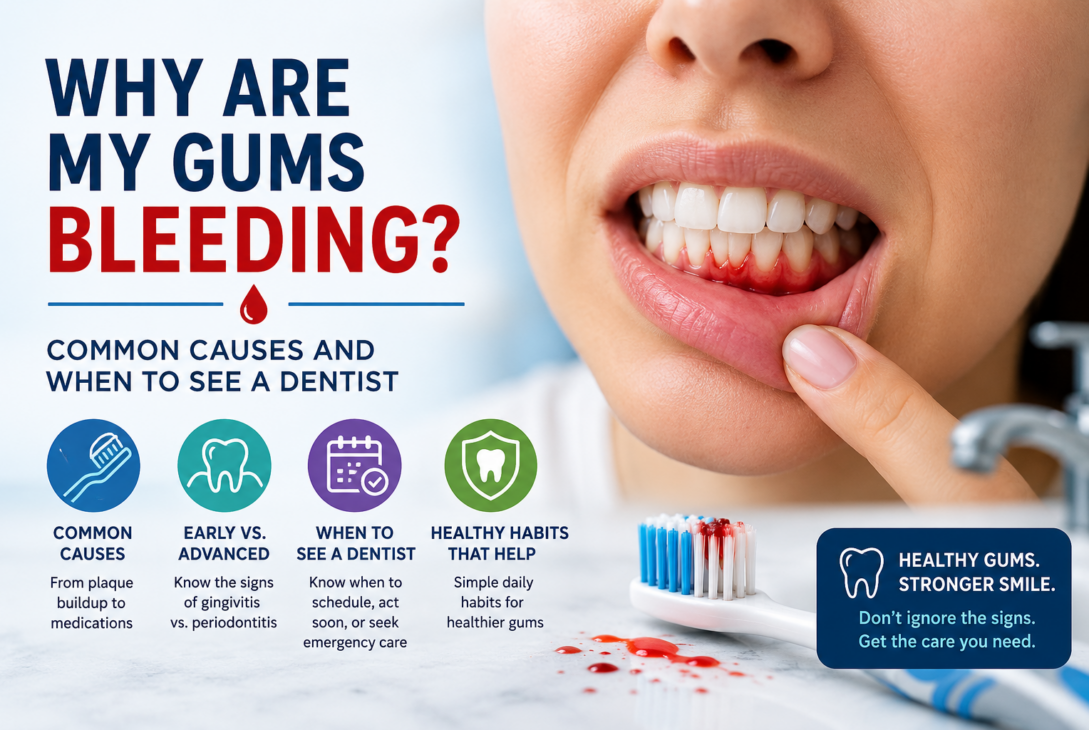
Seeing blood in the sink after brushing is startling, but it is one of the most common dental complaints. In most cases, bleeding gums are a sign of mild irritation that clears up with better home care. In other cases, it points to something more serious that needs professional attention.
Understanding why your gums bleed helps you decide whether to adjust your routine or book a visit. Below, we break down the most common causes, how to tell early gum disease from advanced disease, and when it’s time to seek periodontal care in Houston.
Common Causes of Bleeding Gums
Bleeding gums usually trace back to one of these causes:
- Gingivitis: This early, reversible form of gum disease develops when plaque builds up along the gumline. It leaves tissue red, swollen, and quick to bleed during brushing or flossing.
- Aggressive brushing: Scrubbing too hard or using a toothbrush with stiff bristles can cut and damage fragile gum tissue over time.
- New flossing habits: Restarting a flossing routine after a long break often causes light bleeding for a few days while your gums adjust to the friction.
- Pregnancy gingivitis: Hormonal shifts during pregnancy increase blood flow to oral tissue, making gums far more sensitive to even small amounts of plaque.
- Certain medications: Blood thinners, anticoagulants, and daily aspirin reduce your blood’s ability to clot, so minor gum irritation bleeds more visibly.
- Ill-fitting dental work: Loose dentures, misaligned retainers, or damaged fillings can rub against the gumline and trigger localized bleeding.
- Vitamin deficiencies: Low levels of vitamin C, which supports tissue healing, or vitamin K, which regulates clotting, can make blood vessels fragile.
- Underlying health conditions: Chronic conditions such as type 2 diabetes lower the body’s ability to fight infection, making gum disease and bleeding more likely.
Because so many of these causes overlap, an accurate diagnosis often needs a dentist’s evaluation rather than guesswork at home. Reviewing your own oral hygiene routine is a smart first step, but it isn’t a substitute for a professional exam.
Early Signs vs. Advanced Gum Disease
Not all bleeding is equal. The table below shows how early gingivitis compares to advanced periodontitis, a distinction that guides how urgently you should seek care.
| Feature | Gingivitis (Early Stage) | Periodontitis (Advanced) |
| Gum Appearance | Puffy, red, or shiny margins | Deeply receded, pulling away from the teeth |
| Bleeding Frequency | Occasionally, during brushing or flossing | Persistent, heavy, or triggered by soft foods |
| Bone & Support | No bone loss; fully reversible | Permanent bone damage and loose teeth |
| Other Symptoms | Mild bad breath | Pus at the gumline, chewing pain, constant bad breath |
Gingivitis responds well to a better hygiene routine and a professional cleaning. Periodontitis, on the other hand, requires structured periodontal care to stop the damage from progressing further.
When to See a Dentist
Schedule a Routine Visit
Book a visit to your dental clinic if your gums bleed consistently for more than 7 to 14 days, even though you’re brushing and flossing gently. This kind of ongoing bleeding usually signals plaque buildup that a home routine alone can’t clear.
Book an Appointment Soon
See a dentist promptly if bleeding is paired with chronic bad breath, visibly receding gums, or teeth that feel loose. These signs often point toward periodontitis, which needs treatment before it causes lasting damage.
Seek Emergency Care
Get emergency dental or medical care if your gums start bleeding heavily on their own or if the bleeding won’t stop after several minutes of gentle, direct pressure with clean gauze.
Why Local Periodontal Care in Houston Matters
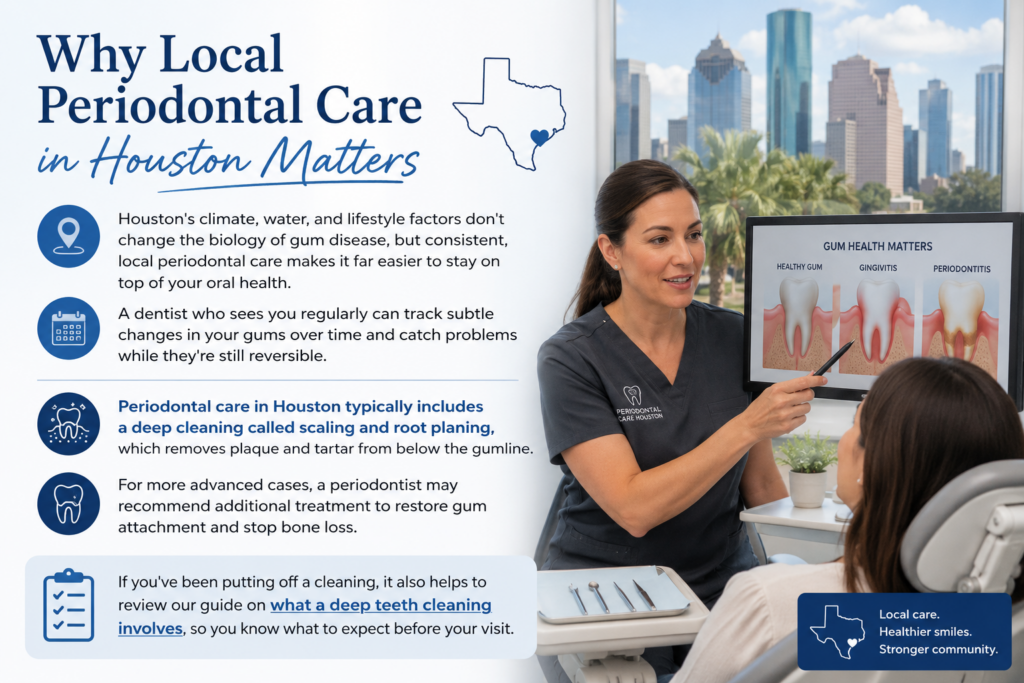
Houston’s climate, water, and lifestyle factors don’t change the biology of gum disease, but consistent, local periodontal care makes it far easier to stay on top of your oral health. A dentist who sees you regularly can track subtle changes in your gums over time and catch problems while they’re still reversible.
Periodontal care in Houston typically includes a deep cleaning called scaling and root planing, which removes plaque and tartar from below the gumline. For more advanced cases, a periodontist may recommend additional treatment to restore gum attachment and stop bone loss.
If you’ve been putting off a cleaning, it also helps to review our guide on what a deep teeth cleaning involves, so you know what to expect before your visit.
Simple Habits That Help Between Visits
- Brush gently: Use a soft-bristled brush and light pressure, twice a day, for two full minutes.
- Floss daily: Give your gums a few days to adjust if you’re restarting the habit; the bleeding should ease as tissue heals.
- Stay hydrated: Water helps rinse away food particles and supports healthy saliva flow, which naturally fights plaque.
- Eat gum-friendly foods: Add more vitamin C and vitamin K to your diet through leafy greens, citrus, and other whole foods.
According to the American Dental Association, daily plaque removal combined with regular professional cleanings is the most effective way to prevent gum disease before it starts. The Centers for Disease Control and Prevention also notes that nearly half of adults over 30 show some signs of gum disease, which makes early detection especially important.
Final Thoughts
Bleeding gums are common, but they’re not something to ignore. Most cases trace back to plaque buildup, a rough brushing habit, or a temporary change in routine, and they clear up quickly with gentler care. Persistent bleeding, however, is your body’s way of asking for help before gum disease progresses.
If your gums have been bleeding for more than a week, or if you’ve noticed other warning signs like bad breath or loose teeth, don’t wait for it to get worse. Schedule an appointment for professional periodontal care in Houston today and give your gums the attention they need to heal.