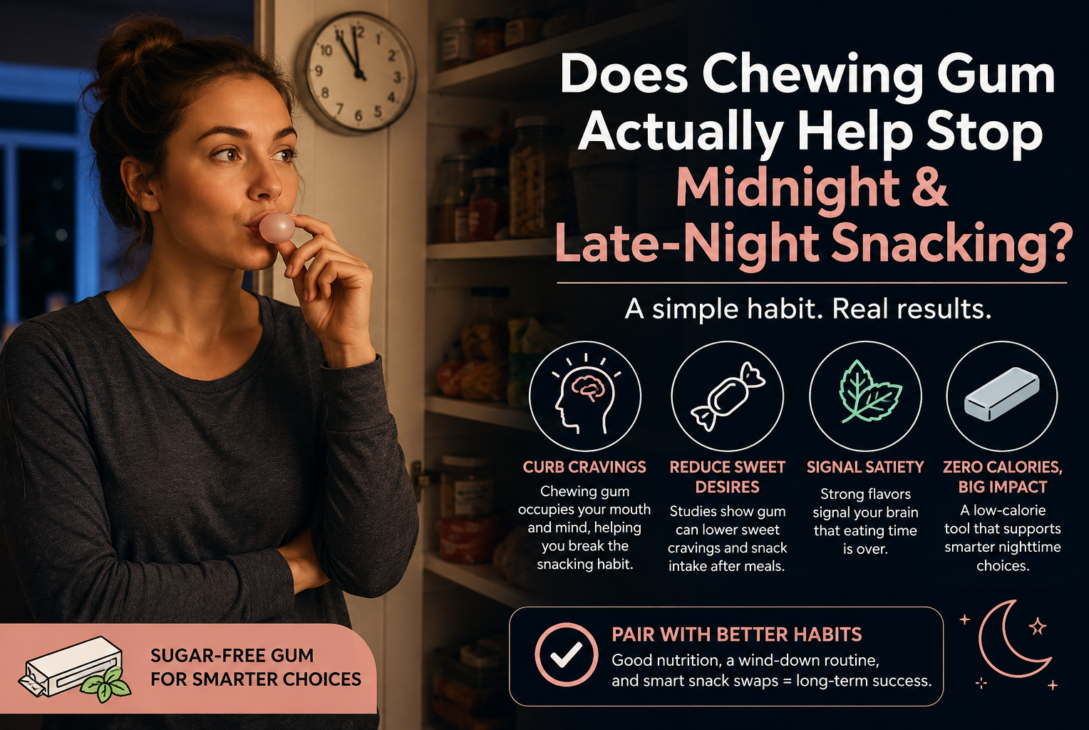
It’s 11 p.m. The kitchen light is off, everyone’s asleep, and yet you’re standing in front of the pantry again. If this sounds familiar, you’ve probably wondered whether something as simple as a stick of gum could break the cycle.
The short answer: yes, gum can help. But it’s not magic, and it doesn’t work the way most people assume.
Research backs up gum as a genuine appetite suppressant gum option for curbing evening cravings, but it works on your brain and behavior more than your stomach. Used the right way, it can be one of the easiest tools for managing late-night cravings as long as you understand its limits too.
How Chewing Gum Affects Late-Night Cravings
It Occupies Your Mouth and Your Mind
Late-night eating is rarely about true hunger. It’s usually boredom, stress, or the automatic habit of snacking in front of the TV.
Gum gives your mouth something to do. That small act of chewing can interrupt the “hand-to-mouth” ritual that drives most nighttime snacking before it even starts.
It Can Blunt the Desire for Something Sweet
Several clinical studies have looked at this directly. In a Pennington Biomedical Research Center trial, people who chewed sugar-free gum after lunch reduced their afternoon snack intake by about 40 calories, with sweet-snack intake dropping by roughly 60 calories compared to when they skipped the gum.
A separate study published in Appetite found similar results: chewing gum for at least 45 minutes after a meal significantly reduced reported hunger, appetite, and cravings, while cutting the amount of snacks eaten afterward by about 10 percent.
This is why sugar-free gum for hunger management has become a go-to recommendation among dietitians: it delivers flavor and a “treat” sensation without the sugar spike that can trigger even more cravings later.
It Signals “Eating Time Is Over”
Strong mint or fruit flavors act as a sensory reset. Once your mouth registers that flavor, food tends to taste off afterward, which naturally discourages you from reaching for a snack.
This is the same psychological trick behind brushing your teeth after dinner; it tells your brain the kitchen is closed for the night.
Does the Science Actually Hold Up?
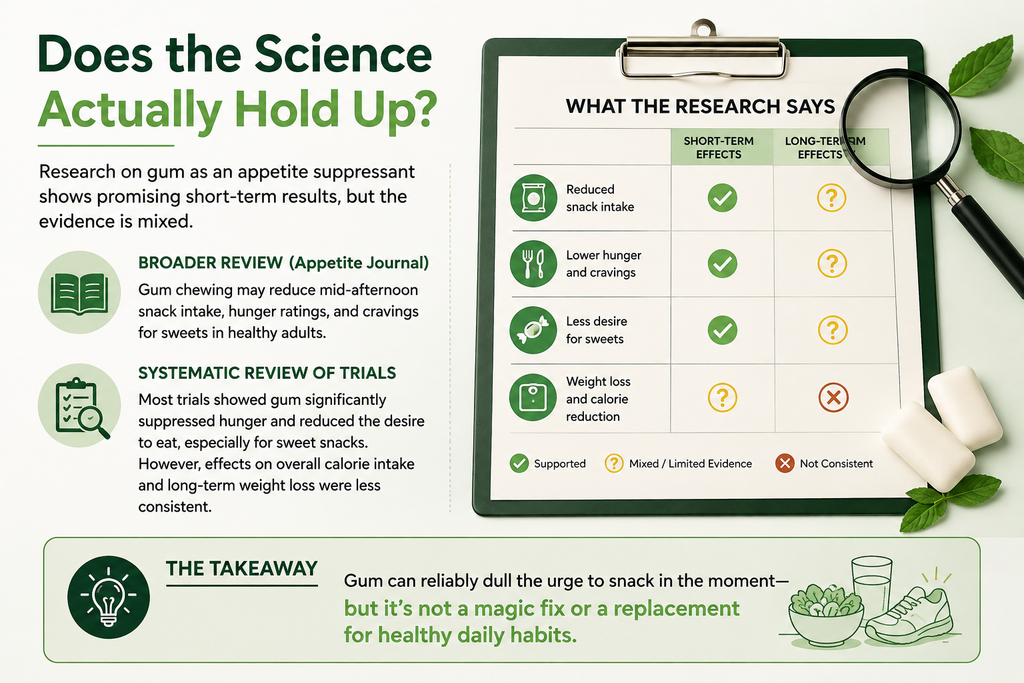
Not every study agrees on how strong the effect is. A broader review in the journal Appetite noted that gum chewing may reduce mid-afternoon snack intake, hunger ratings, and cravings for sweets in healthy adults, though the overall evidence remains limited and mixed.
A more recent systematic review of clinical trials reached a similarly cautious conclusion: most trials showed gum significantly suppressed hunger and reduced the desire to eat, particularly for sweet snacks, but effects on overall calorie intake and long-term weight loss were far less consistent.
The takeaway for curbing sugar cravings purposes is realistic, not miraculous: gum reliably dulls the urge to snack in the moment, but it isn’t a substitute for good eating habits during the day.
The Limitations of Using Gum as an Appetite Suppressant
It Won’t Fix Genuine Hunger
If you’re waking up hungry because your blood sugar dropped overnight or you simply didn’t eat enough during the day, gum won’t solve that. Real hunger needs real food; chewing gum on an empty stomach just delays the inevitable.
It Can Cause Bloating
Chewing gum means swallowing extra air. For some people, that leads to an uncomfortably bloated stomach right before bed, which isn’t ideal for sleep quality either.
It May Not Support Long-Term Satiety Support
Gum can quiet a craving for twenty minutes, but it doesn’t provide the satiety support that comes from actual nutrients like protein or fiber. Lean on it too often, and you may just be postponing hunger rather than managing it.
Building a Complete Strategy Against Late-Night Snacking
Gum works best as one piece of a bigger plan, not the whole plan.
Brush your teeth right after dinner. Doing this early instead of waiting until bedtime creates a clear mental boundary that the kitchen is closed. Food also tastes worse right after mint toothpaste, which naturally curbs the urge to snack again.
Fix your daytime nutrition. A dinner built around lean protein and healthy fats keeps blood sugar stable and prevents the crash that often triggers 10 p.m. cravings in the first place.
Swap the habit, not just the snack. If your trigger is the couch-and-snack routine, replace it with a warm, zero-calorie ritual like decaffeinated herbal tea. This rewires the habit loop without willpower alone.
Try urge surfing. When a craving hits, wait fifteen minutes before deciding whether to eat. Do a puzzle, read a chapter, or fold laundry. Most cravings fade well before the timer runs out.
Keep smart snack alternatives on hand. For nights when hunger is real, having a few better-for-you snack alternatives ready, like Greek yogurt, a handful of almonds, or sliced fruit, beats defaulting to whatever’s fastest to grab.
Final Verdict: Should You Try Gum for Late-Night Snacking?
Chewing gum genuinely helps reduce late-night snacking for a lot of people, mainly by keeping your mouth occupied, dulling sweet cravings, and creating a clear signal that eating is done for the day. It’s an easy, low-cost, zero-calorie habit worth trying.
Just don’t expect it to solve hunger that’s rooted in a skipped dinner or a stressful day. Pair it with a solid eating schedule, a wind-down ritual, and a few go-to healthy snacks, and you’ll have a far more reliable defense against those midnight kitchen trips.