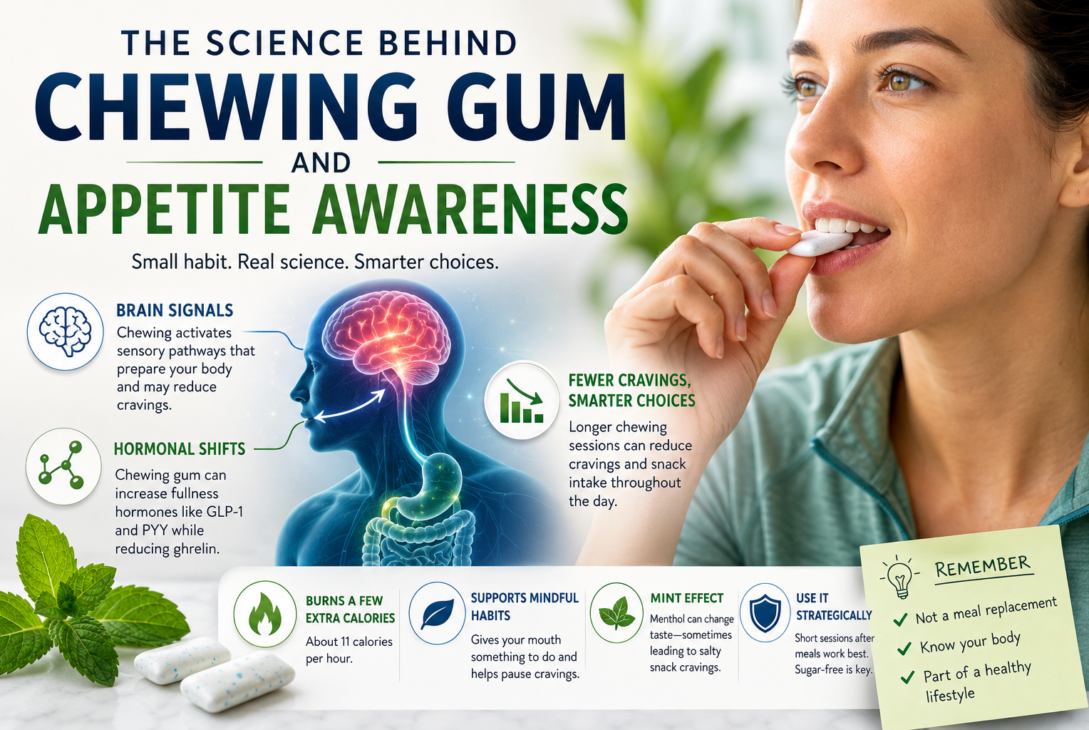
Have you ever reached for a stick of gum instead of a snack? That small habit is backed by real biology. A healthy lifestyle chewing gum routine can change how your brain, gut, and hormones respond to hunger long before you take a single bite of food.
Chewing gum is not a magic weight-loss tool. But it does influence appetite in measurable ways. Understanding the science helps you use gum as a smart, supportive habit rather than a guessing game. Here is how chewing actually affects your hunger signals.
The Cephalic Phase Response: Your Body’s Early Warning System
Digestion does not start in your stomach. It starts the moment your jaw begins to move.
This early stage is called the cephalic phase response, and it explains why chewing gum can feel surprisingly satisfying.
Trick Responses
Chewing activates your salivary glands and signals your body to prepare digestive enzymes. Your system essentially gets ready for a meal that may never arrive.
Brain Signals
Your jaw muscles send direct signals to your brain, indicating that food is on the way. This is one reason mindful chewing habits are often part of a broader healthy lifestyle chewing gum approach.
Appetite Suppression
This sensory trick can temporarily ease the oral fixation many people associate with snacking. It gives your mouth something to do, which can quiet cravings before they build.
Hormonal Shifts That Support Appetite Control
Beyond brain signals, chewing gum also interacts with the hormones that regulate fullness and hunger.
GLP-1 and PYY: The Fullness Hormones
Research published on PubMed found that fasting sugarless gum chewing increased satiety and reduced the natural decline of GLP-1, a hormone linked to feeling full.
Other reviews of chewing studies have reported increased GLP-1 alongside suppressed ghrelin after more chewing cycles, reinforcing the connection between mastication and fullness signaling.
Ghrelin Reduction
Ghrelin is often called the hunger hormone. It rises when your stomach is empty and prompts you to eat. The physical motion of chewing appears to help moderate this rise, giving your body a brief pause before hunger intensifies.
Calorie Intake and Cravings
Chewing gum does more than send signals. It can shape actual eating behavior throughout the day.
Snack Reduction
Chewing gum for extended periods, often 45 minutes or more, has been shown to meaningfully reduce cravings for sweet snacks. This makes gum a useful tool during the mid-afternoon slump, when sugar cravings tend to peak.
Energy Expenditure
The physical act of chewing burns a small amount of extra energy, roughly 11 calories per hour. It will not replace exercise, but it is a small metabolic nudge that adds up over a day of steady chewing.
The Mint Cavity Effect
Menthol-flavored gum can temporarily alter your taste buds. Fresh fruit and other naturally sweet foods may taste unusually bitter afterward. Interestingly, this shift sometimes pushes people toward salty snacks instead, which is worth keeping in mind if you are managing cravings with intention.
Potential Downsides of Chewing Gum for Appetite Control
Chewing gum is not without tradeoffs. A well-rounded healthy lifestyle chewing gum habit means understanding the downsides too.
Bloating and Swallowed Air
Chewing causes many people to swallow excess air. Over time, this can lead to bloating and mild gas, especially with prolonged or aggressive chewing.
Artificial Sweeteners
Sugar-free gums often rely on sugar alcohols like sorbitol. According to the Cleveland Clinic, large amounts of these sweeteners can cause digestive discomfort, including cramping or a laxative effect for sensitive individuals.
Increased Hunger in Some People
For some, chewing gum without food stimulates gastric juices that make the stomach feel emptier, not fuller. This response varies by individual, so paying attention to your own body’s signals matters more than following a blanket rule.
Making Chewing Gum Part of a Healthy Lifestyle
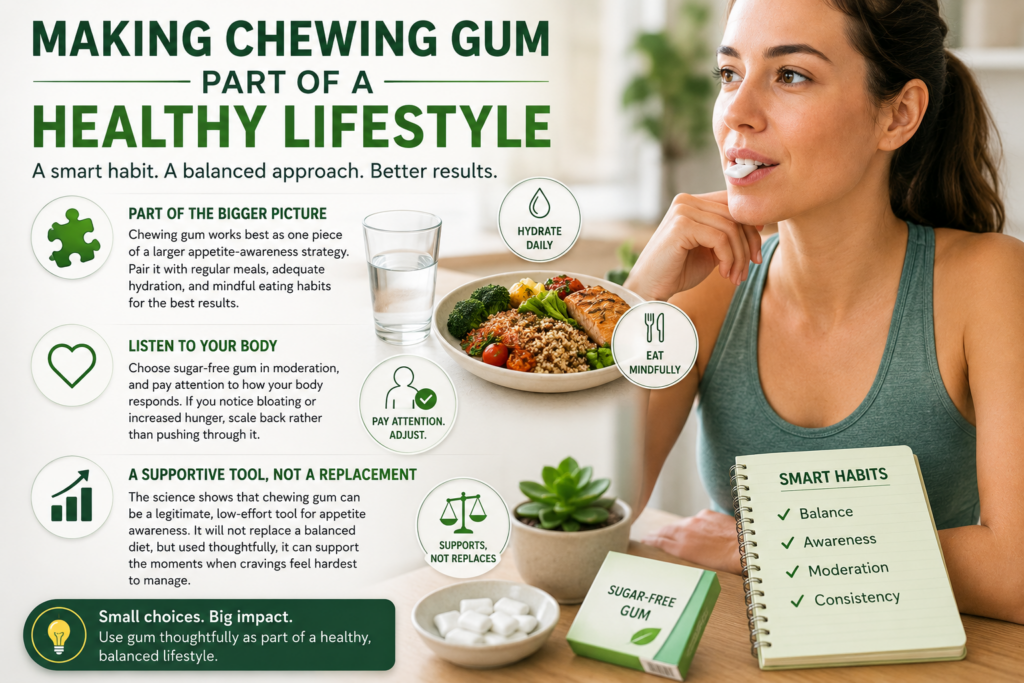
Chewing gum works best as one piece of a larger appetite-awareness strategy, not a standalone fix. Pair it with regular meals, adequate hydration, and mindful eating habits for the best results.
Choose sugar-free gum in moderation, and pay attention to how your body responds. If you notice bloating or increased hunger, scale back rather than pushing through it.
The science shows that chewing gum can be a legitimate, low-effort tool for appetite awareness. It will not replace a balanced diet, but used thoughtfully, it can support the moments when cravings feel hardest to manage.
Simple Ways to Use Gum Strategically
A few small adjustments can make your chewing gum habit more effective and more comfortable.
- Chew after meals instead of on an empty stomach, so you avoid stimulating gastric juices without food.
- Stick to shorter sessions, around 15 to 20 minutes, to limit swallowed air and reduce bloating risk.
- Rotate flavors occasionally if mint seems to be steering you toward salty snacks.
- Check the label for sugar alcohol content if you have a sensitive digestive system.
These small habits help you capture the appetite-awareness benefits of gum while avoiding the common downsides.
Who Might Benefit Most
Chewing gum tends to help most when cravings are driven by boredom, stress, or habit rather than true hunger. If you find yourself snacking mindlessly at your desk or reaching for something sweet out of routine, a piece of sugar-free gum can interrupt that pattern.
It is less useful as a stand-in for an actual meal. If your body is signaling real hunger, gum may only mask the feeling temporarily, and in some cases make it more noticeable once the gum is gone.
The Takeaway
The connection between chewing gum and appetite is more than a wellness myth. Sensory signals, hormone shifts, and mindful distraction all play a role in how gum affects hunger.
If you are building a healthy lifestyle chewing gum routine, start small. Reach for a sugar-free piece during your next craving window and notice how your body responds. Explore our full guide to appetite-friendly snacking habits to build a routine that works for you.