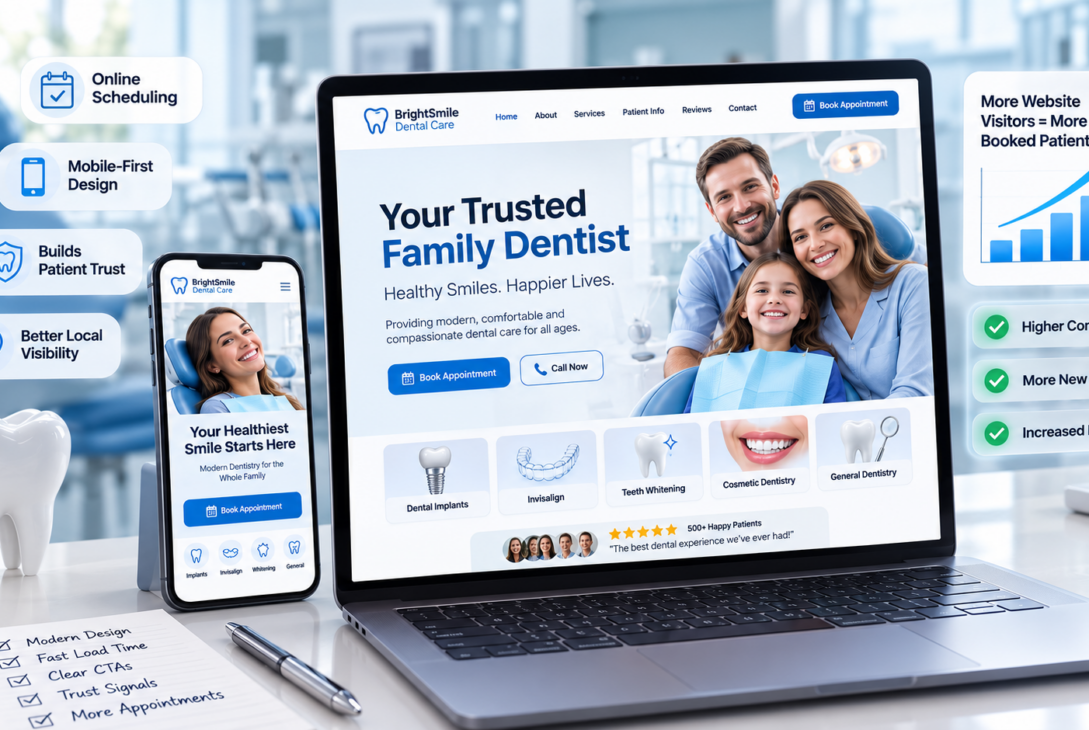
Your dental website is working right now — either for you or against you. In 2026, patients don’t just browse a site; they decide within seconds whether to book, call, or bounce to a competitor down the street.
A well-designed dental website design isn’t a nice-to-have anymore. It’s the front desk that never sleeps, the first impression that decides whether a curious visitor becomes a paying patient.
Practices still running outdated, static sites are quietly losing new patients every single day — not because their care is worse, but because their website fails to convert the traffic it already has.
The Financial Impact of a High-Converting Website
Most dental websites look polished on the surface. Clean fonts, nice photography, a logo in the corner. Yet many still fail to turn visitors into booked patients.
That’s because visual polish and conversion design are two different disciplines. A site can look great and still confuse or stall a first-time visitor at the exact moment they’re ready to book.
Here’s what that gap looks like in real numbers, based on industry benchmarks:
| Metric | Basic Brochure Site | High-Converting Engine | Difference |
| Monthly Traffic | 500 visitors | 500 visitors | No change needed |
| Average Conversion Rate | 2% | 6% | 3x higher |
| New Patient Bookings / Mo | 10 appointments | 30 appointments | +20 appointments |
| Avg. Patient Lifetime Value | $1,500 | $1,500 | Same |
| Total Annual Revenue | $180,000 | $540,000 | +$360,000 |
Same traffic. Same ad spend. The only difference is how effectively the site turns visitors into booked appointments — and that difference is worth $360,000 a year in this example.
Why 2026 Demands a Smarter Website
Mobile-First Is No Longer Optional
The majority of dental searches now happen on a phone, often between errands or during a lunch break. If a page loads slowly or the layout feels clunky, visitors leave in seconds.
A mobile-native layout with fast load times and clear tap targets keeps that window of intent from closing before a patient even sees your services.
AI Search Is Changing How Patients Find You
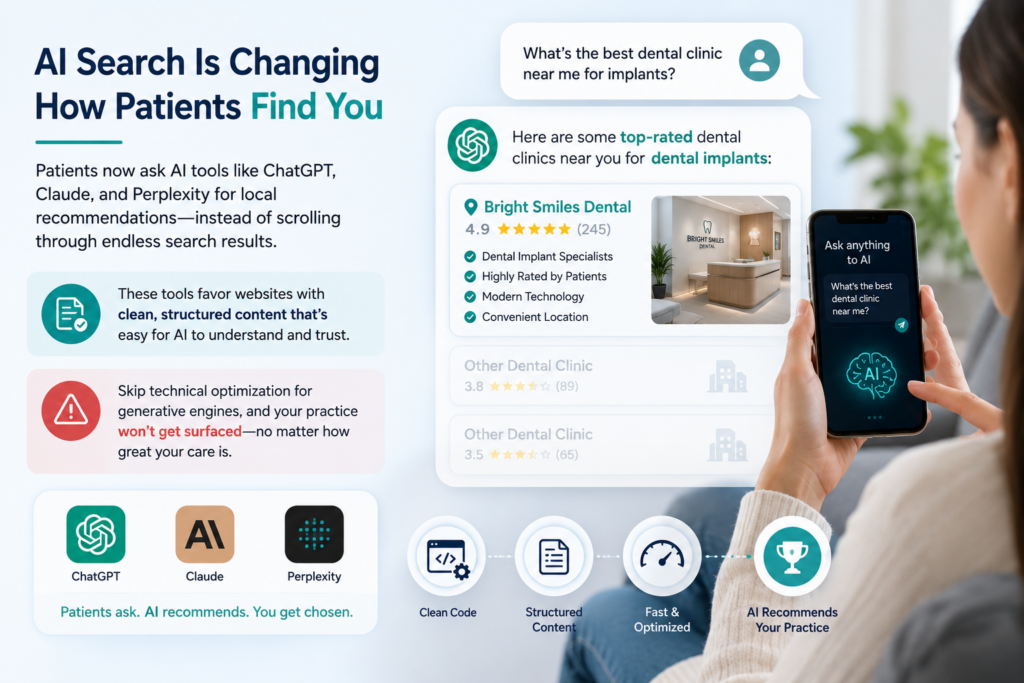
Patients increasingly ask AI tools like ChatGPT, Claude, and Perplexity for local recommendations instead of scrolling through search results. These tools favor sites with clean, structured content that’s easy to parse.
Practices that skip technical optimization for generative engines simply don’t get surfaced in these AI-driven recommendations, regardless of how good their care actually is.
Protecting Your Ad Spend
Many practices pay well for clicks on high-intent searches like “Invisalign near me,” only to send that traffic to a generic homepage instead of a dedicated landing page.
When the landing experience doesn’t match the search intent, conversion rates drop and ad dollars are wasted before a single appointment gets booked.
What a High-Converting Dental Website Actually Includes
Real-Time Online Scheduling
A simple, fast booking flow — ideally three steps or fewer — removes the friction of waiting for office hours to make a phone call. Modern patients expect to book on their own schedule, day or night.
Sticky, Visible Calls-to-Action
Click-to-call buttons, directions, and booking links should stay visible above the fold, especially on mobile, so the next step is always one tap away.
Dedicated Pages for High-Value Treatments
Instead of listing every service on one crowded page, standalone pages for implants, veneers, and clear aligners perform better for both search visibility and patient decision-making.
This structure also strengthens local SEO by matching the specific way patients search for treatments in their area.
Visible Trust Signals
Patient reviews, short doctor-led videos, and visible credentials build the confidence a new patient needs before choosing a provider. People want reassurance before they commit to care.
Turning Traffic Into a Full Schedule
A high-converting dental website isn’t about attracting more visitors — it’s about making better use of the visitors already arriving at your site.
For most practices, that means a one-time investment in structure, speed, and clarity, rather than an ongoing increase in ad spend.
If your current site isn’t built around mobile-first design, fast booking, and clear trust signals, it may be costing you new patients every month without you realizing it.
Ready to See What Your Website Could Be Doing for You?
A conversion-focused audit can show exactly where your current site is losing potential patients — and what a redesigned experience could mean for your monthly bookings.
Reach out today for a free website conversion review and see how much revenue may be sitting untapped in your existing traffic.