
Signing a commercial lease is one of the biggest financial commitments a business will make. Yet most companies walk into negotiations without anyone in their corner. That’s where a commercial tenant representative comes in.
If you’re weighing whether to hire one, the short answer is yes. Here’s why and exactly what a tenant broker does for your business.
What Is Commercial Tenant Representation?
Commercial tenant representation is a real estate service built entirely around the tenant’s interests. A tenant representation broker is a licensed professional who works exclusively for the company leasing space, not the landlord marketing it.
This distinction matters. Every other party at the negotiating table the listing agent, the landlord’s attorney, even the property manager is working to protect the owner’s bottom line. A tenant rep broker exists to protect yours.
Why Hire a Tenant Rep Broker?
It Doesn’t Cost You Anything
Here’s the detail that surprises most business owners: tenant broker services are typically free. The commission comes out of the deal the landlord already budgets for, whether you use a broker or not.
Skipping representation doesn’t put that money back in your pocket. It simply lets the landlord’s agent collect the full commission while you negotiate alone, without the benefit of anyone pushing back on your behalf.
You Get an Advocate, Not a Salesperson
A commercial real estate broker representing the landlord has one job: fill the building at the best possible rate. A tenant rep broker has the opposite mandate get you the lowest cost and the most favorable terms available in the market.
What a Tenant Broker Actually Does
A good commercial lease broker manages the transaction from the first space tour to the final signature. Their work generally falls into four categories.
1. Strategic Needs and Site Selection
Before touring a single property, your broker defines what you actually need. That means:
- Analyzing headcount projections and workplace requirements to right-size your footprint
- Mapping the entire market, including off-market and unlisted opportunities
- Curating tours objectively, without steering you toward any one landlord
This groundwork alone can save months of wasted searching, since your broker filters out properties that don’t fit your budget, timeline, or growth plans before you ever step foot inside.
2. Creating Leverage and Negotiating
Competition is what drives better lease terms, and a tenant rep broker knows how to create it.
They typically issue requests for proposals (RFPs) to several landlords at once, forcing each one to compete for your business. From there, they build financial models comparing the true cost of occupancy across properties not just headline rent, but build-out costs, escalations, and hidden fees.
That leverage translates into lower base rent, larger tenant improvement (TI) allowances, and longer rent abatement periods.
3. Protecting You From Hidden Lease Clauses
Commercial leases run dozens of pages, and the language rarely favors the tenant by default. An experienced tenant representation broker knows exactly where the risk hides, including:
- Aggressive rent escalation clauses
- Restrictive assignment and subleasing rights
- Vague Common Area Maintenance (CAM) charges and repair obligations
Catching these issues before signing can save a business tens of thousands of dollars over a lease term.
4. Ongoing Portfolio Support
The relationship doesn’t end at signing. A tenant rep broker also advises on renewals, expansions, and if your needs shrink downsizing strategies like subleases or early termination options.
For growing companies, this ongoing counsel often becomes as valuable as the original negotiation.
Tenant Rep vs. Landlord Broker: What’s the Difference?
| Feature | Tenant Representative | Landlord Broker / Listing Agent |
|---|---|---|
| Loyalty | Exclusively to the tenant | Exclusively to the property owner |
| Goal | Lowest cost, best terms for your business | Highest rent, maximum property value |
| Market View | Entire market | Only the buildings they’re hired to lease |
| Cost to You | Free (landlord-paid commission) | Free (landlord-paid commission) |
Once you see the incentives laid out side by side, the value of independent representation becomes obvious.
Who Should Use a Tenant Rep Broker?
Almost any business signing or renewing a commercial lease benefits from tenant broker services, including companies that are:
- Opening a first office, retail space, or industrial facility
- Renewing an existing lease without knowing current market rates
- Expanding into a new city or region
- Consolidating or downsizing multiple locations
The more complex the transaction, the more a tenant rep broker’s negotiation experience pays off.
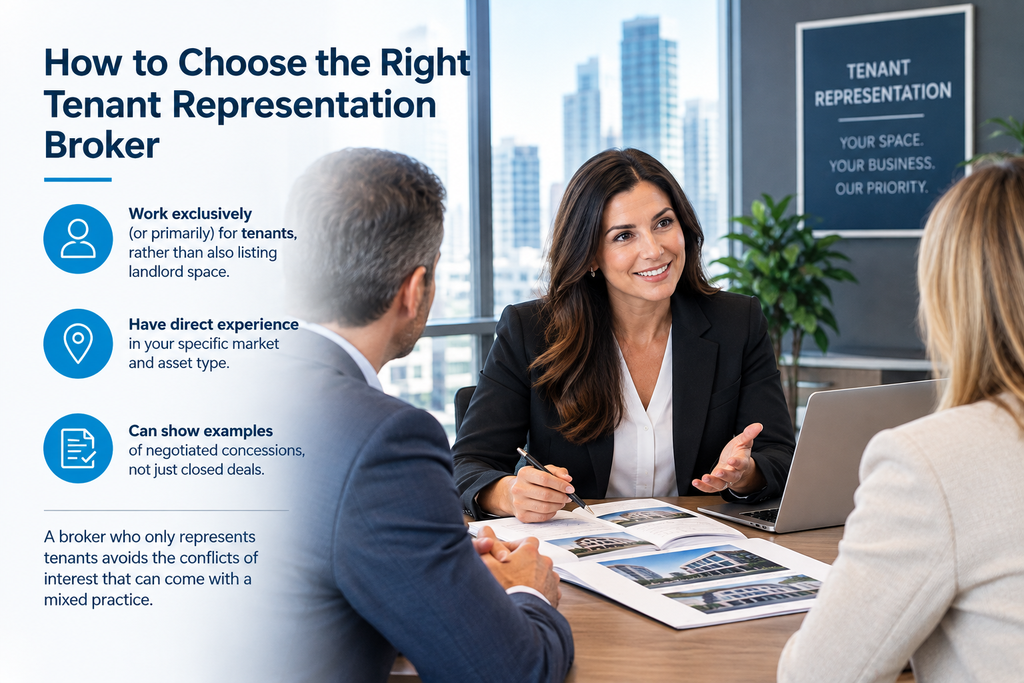
How to Choose the Right Tenant Representation Broker
Not all commercial real estate brokers offer true tenant-side representation. When evaluating a candidate, ask whether they:
- Work exclusively (or primarily) for tenants, rather than also listing landlord space
- Have direct experience in your specific market and asset type
- Can show examples of negotiated concessions, not just closed deals
A broker who only represents tenants avoids the conflicts of interest that can come with a mixed practice.
Final Thoughts
Hiring a commercial tenant representative costs you nothing and puts an experienced negotiator squarely on your side of the table. From site selection through lease renewal, a tenant rep broker handles the details that most businesses don’t have the time or the expertise to manage alone.
Before you sign your next lease, talk to a tenant representation broker who can review your options and negotiate on your behalf. The right guidance now can shape your occupancy costs, flexibility, and overall lease experience for years to come.