Commercial lease signing is one of the largest funding commitments you can actually make as a business owner. The advertised rent is but one side of the coin. The commercial lease negotiation should also include provisions for operating expenses, rent increases, repairs, tenant improvements, renewal rights, and what happens if you leave the business early.
An astutely negotiated lease can preserve cash flow and mitigate nasty surprises. Here are 10 areas to check before you sign.
Research Comparable Market Rents
Start by researching similar properties in the same market. Compare base rent, property condition, location quality, parking, accessibility, visibility, included services, and tenant improvement allowances.
Never compare properties based on rent only. A lower base rent space may cost more once you include CAM charges, taxes, insurance, maintenance, and utilities.
Request the full annual occupancy cost estimate and check if the quoted rent is gross, modified gross, Net, or triple-net.
Understand the Lease Structure
How the lease is structured determines who pays certain expenses.
Many operating costs are in the rent of a gross lease. With a modified gross lease, certain expenses are shared. In a net lease structure, the tenant pays base rent plus some operating costs, and in a triple-net structure, common property taxes, insurance, and maintenance expenses are passed through to the tenant.
Each additional charge must be clearly listed. Check how the expenses are charged, when they should be paid, and if these records can be checked.
Negotiate Base Rent and Escalations
The initial rent is important, but future increases can actually end up costing much more over the course of a long lease.
Pay close attention to any rent escalation clause. Annual increases can be fixed, pegged to the Consumer Price Index, or related to market rates at renewal.
If you can, try to negotiate an explicit max increase. With a predictable rent increase, there is less chance of an unexpected cost, making long-term budgeting easier.
Control CAM and Operating Expenses
Common area maintenance (CAM) charges can include landscaping, security, cleaning, parking areas, shared utilities, and more on the property.
Request a full breakdown of allowable CAM expenses and exclude costs like leasing commissions, landlord penalties, legal fees in your favor, and some capital improvements.
In addition, CAM expenses provide much-needed protection. If you believe that your charges are incorrect, you may want to have the right to review annual reconciliations and supporting documentation.
Negotiate Tenant Improvement Allowances
Negotiate the tenant improvement allowance (TIA) upfront if the premises will be constructed or remodeled.
The contract should detail the use of the allowance, construction oversight, standards to be met, and reimbursement.
You can also secure a period of free rent, a construction allowance, or a deferral of rent commencement. Do not take for granted that a “turnkey” includes all of the enhancements for your business. Ask for the obligations of landlords to be in writing.
Clarify When Rent Starts
Commercial leases will usually also include various dates, such as the start of possession, the end of construction, the store opening, and the start of rent.
If the property is unfinished, you may want a clause stating that rent does not start until such improvements have been completed to an agreed standard and you have received beneficial possession.
During lease negotiations or drafting, bargaining for a rent abatement period can be beneficial, allowing time to construct, obtain permits, equip, and prepare for opening. The lease clarifies which expenses are payable during this period.
Protect Your Permitted Use
Your permitted-use provision covers your current business but allows for reasonable future growth as well.
Decide if you need rights to online sales, workshops or trainings, deliveries, pickup services, outside sales, storage, or related products or services.
Check for signage rights, hours of operation, parking and loading access, zoning, licensing, and exclusive-use provisions. If your business relies on a specific permit or approval, you might consider making your lease contingent on getting one.
Limit Personal Guarantees
A personal guarantee could potentially put the business owner’s personal assets at risk if the company defaults.
If a landlord asks for a security deposit, then negotiate what it covers. You might be able to have the guarantee cover a specific amount for a designated timeframe for certain lease obligations.
Alternatively, a larger security deposit, letter of credit, or good-guy guarantee with no liability cap the tenant vacates, provided after the tenant vacates in good standing.
Study the guarantee separately from the lease. It canincludeo have provionted to renewal timeframes, amendments, repairs, and legal matters, etc.
Renewal, Assignment, and Exit Rights to Negotiate
Conditions of business can change dramatically over the term of a long lease. Though renewal options provide more control over remaining in the property, the renewal formula should also be well-defined.
Go through the notice period and the manner of renewal rent determination.
You should also know rights regarding your assignment and subletting rights. These clauses could be critical if you decide to sell your business, restructure your company, or relocate operations.
If at all possible, negotiate language that the landlord cannot unreasonably withhold, condition, or delay consent.
Evaluate Repair, Insurance, and Default Terms
Catastrophic and expensive obligations do not look at all like rent.
Clarify HVAC repairs, plumbing, electrical systems, structural components, roofing, storefronts, pest control, parking areas, and code compliance.
Next, look at insurance requirements, indemnification, casualty and condemnation restoration, and landlord default remedies.
Be especially focused on default and cure periods. You can correct a payment, reporting, or administrative mistake before serious enforcement action, thanks to the use of a reasonable notice period.
Calculate the Real Occupancy Cost
Before comparing properties, calculate the total effective occupancy cost:
Base rent & CAM + taxes + insurance + utilities + maintenance − concessions
Do not forget one-time expenses such as like increases, deposits, tenant improvements, equipment, restoration commitments, and more! This gives you a more accurate perspective of what the sites will cost.
Frequently Asked Questions
What is the first thing you should negotiate in a commercial lease?
Ideally, your data includes total occupancy cost, lease term, rent increases, operating expenses, tenant improvements, and exit rights as the starting point. This is how the finance provisions can most affect your financial commitment term.
Longer Commercial Lease — Is It Necessary?
Not necessarily. Longer terms may offer stability and certainty of occupancy, but can also provide for less flexibility. Think about renewal options, termination rights, assignment rights, and the growth of your business before signing.
Very often, we get asked if it is a good idea to hire a lawyer to review a commercial lease.
Yes. A commercial real estate attorney can highlight obligations that may be apparent, especially regarding triple-net leases, personal guarantees, construction responsibilities, and long-term commitments.
Review Every Term Before Signing
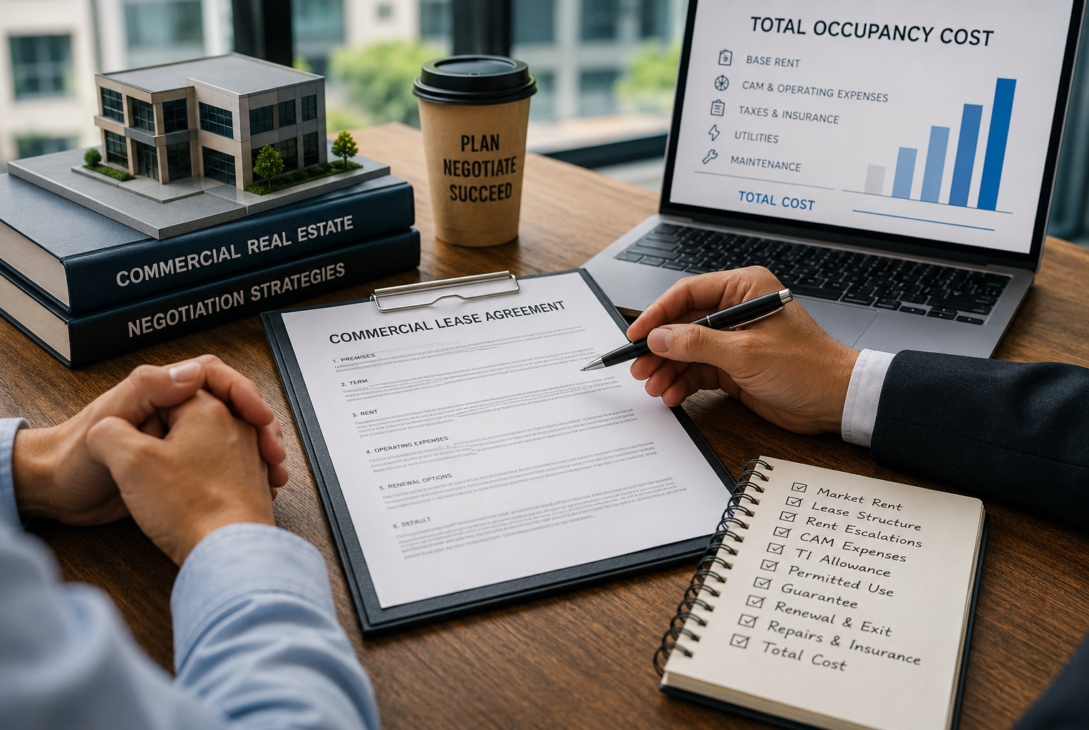
A commercial lease is a business deal, not a simple contract that defines monthly rent. Identify terms related to: premises, critical dates, escalation, operating expenses, tenant improvements, permitted use, guaranteed, renewal rights, repairs, insurance, default provisions, and restoration obligations.
Most importantly, negotiate before signing. Even though a poor lease can be avoided until after it is executed, amending unfavorable terms is a complicated and costly process. A well-suited agreement will provide you with greater financial predictability and adaptability throughout the lease term.