Owning a waterfront home in Northern Michigan comes with incredible views, fresh air, and year-round outdoor beauty. It also means your home faces some of the toughest weather conditions in the Midwest. Heavy snowfall, freezing temperatures, strong winds, lake-effect moisture, and frequent freeze-thaw cycles can shorten the lifespan of roofing and siding if the wrong materials are installed.
Choosing the right roofing and siding is about more than appearance. It protects your investment, reduces maintenance, improves energy efficiency, and helps your home withstand decades of changing weather.
Whether you’re building a new lakefront home or planning a remodeling project, understanding how Northern Michigan’s climate affects exterior materials will help you make informed decisions.
Understanding Northern Michigan’s Climate
Northern Michigan experiences four distinct seasons, each presenting different challenges for residential construction. Homes near lakes often experience stronger winds, higher humidity, and greater moisture exposure than inland properties.
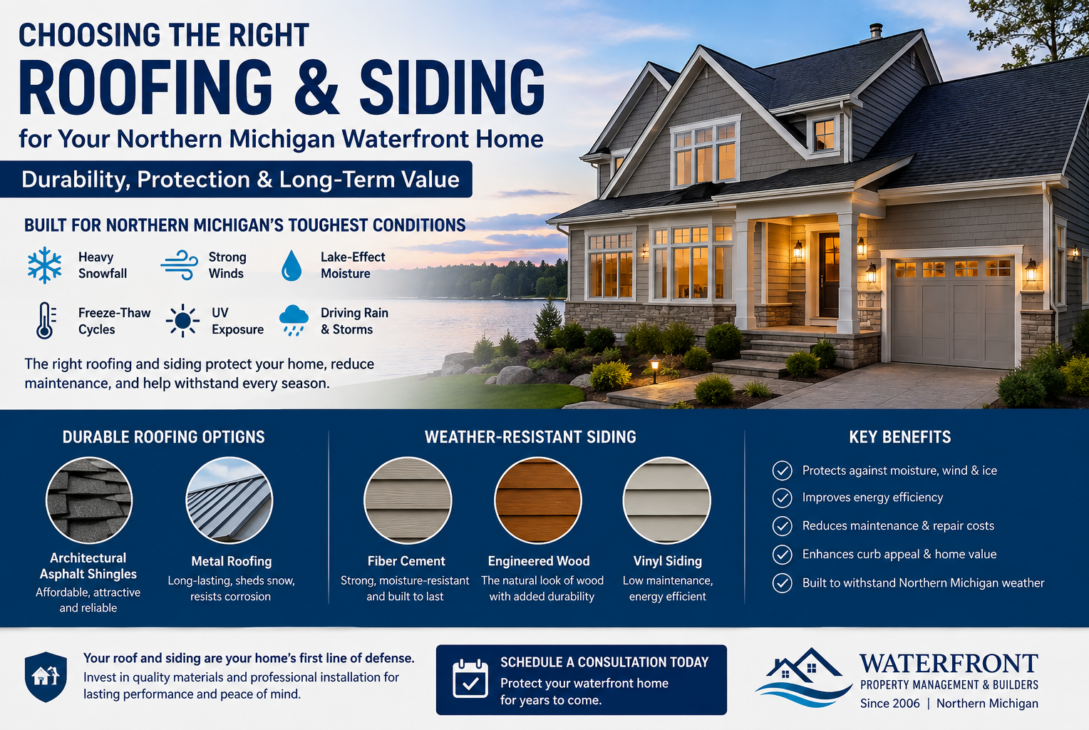
Common weather conditions include:
- Heavy snow accumulation
- Ice dams
- Strong seasonal winds
- Lake-effect moisture
- Freeze-thaw cycles
- UV exposure during summer
- Driving rain and storms
These conditions continuously expand, contract, and stress exterior building materials. Over time, even minor weaknesses can develop into costly repairs if your roof and siding aren’t designed for the local environment.
For waterfront homeowners, selecting weather-resistant materials is one of the most important investments you can make.
Why Waterfront Homes Require Different Roofing Materials
Homes located near lakes experience higher moisture levels than many inland properties. Constant exposure to humidity, wind-driven rain, and snow can accelerate roof deterioration when lower-quality materials are used.
The right roofing system should provide:
- Excellent moisture resistance
- Wind protection
- Ice dam defense
- Long-term durability
- Energy efficiency
- Low maintenance requirements
Many homeowners choose architectural asphalt shingles because they offer dependable performance and attractive curb appeal. Premium metal roofing has also become increasingly popular due to its ability to shed snow, resist corrosion, and withstand harsh winter weather.
Choosing the best roofing material depends on your home’s design, location, budget, and long-term maintenance goals.
How Snow and Ice Affect Your Roof
Northern Michigan winters often bring significant snowfall. While snow itself doesn’t usually damage a properly installed roof, accumulated weight combined with melting and refreezing creates problems.
One of the most common issues is ice dams.
Ice dams form when heat escaping from the attic melts roof snow. As water reaches colder roof edges, it refreezes and creates a barrier that prevents proper drainage. Water can then back up beneath shingles, increasing the risk of leaks and interior water damage.
Professional roofing contractors reduce these risks through:
- Proper attic insulation
- Roof ventilation
- Ice and water shield installation
- Quality flashing systems
- Correct roof slope design
Routine roof inspections before winter help identify worn shingles, damaged flashing, or ventilation issues before they become larger problems.
Choosing Siding That Can Handle Waterfront Conditions
Siding serves as your home’s first line of defense against moisture, wind, and temperature changes.
Waterfront homes benefit from siding materials that resist:
- Moisture absorption
- Warping
- Rot
- Mold growth
- Insect damage
- UV fading
Several siding options perform well in Northern Michigan.
Fiber Cement Siding
Fiber cement siding is known for exceptional durability. It resists moisture, insects, fire, and harsh weather while providing the appearance of traditional wood.
It performs particularly well in waterfront environments where durability is a priority.
Engineered Wood Siding
Modern engineered wood siding combines the natural appearance of wood with improved resistance to moisture and insects.
When professionally installed and maintained, it offers an attractive solution for many lakefront homes.
Vinyl Siding
Premium insulated vinyl siding remains a popular option because it requires relatively little maintenance and offers excellent value.
High-quality products are designed to resist fading, cracking, and weather-related expansion while improving energy efficiency.
Wind Exposure Around Lakes Can Shorten Material Life
Many Northern Michigan waterfront properties are more exposed than homes located farther inland.
Strong winds can:
- Lift shingles
- Damage roof edges
- Loosen siding panels
- Drive rain behind exterior materials
- Increase maintenance needs
Choosing roofing systems with higher wind ratings and professionally installed siding helps minimize storm-related damage.
Attention to flashing, trim, fastening methods, and waterproof barriers is just as important as selecting quality materials.
Professional installation often determines how well your exterior performs during severe weather.
Energy Efficiency Starts with Your Exterior
Many homeowners think of roofing and siding primarily as weather protection, but they also play a major role in energy performance.
A properly designed exterior can help:
- Reduce heating costs
- Improve indoor comfort
- Minimize drafts
- Prevent moisture intrusion
- Protect insulation performance
Modern roofing systems often include reflective materials that reduce summer heat gain, while insulated siding helps stabilize indoor temperatures during cold winters.
Combining quality roofing, siding, insulation, and ventilation creates a more energy-efficient home that remains comfortable throughout the year.
Signs It’s Time to Replace Your Roof or Siding
Weather damage often develops gradually.
Watch for warning signs such as:
Roofing
- Missing shingles
- Curling shingles
- Water stains on ceilings
- Granule loss
- Sagging roof areas
- Ice dam damage
- Frequent repairs
Siding
- Cracks
- Warping
- Soft spots
- Mold or mildew
- Loose panels
- Peeling paint
- Water intrusion
Addressing these issues early can prevent more extensive structural repairs later.
Why Professional Installation Matters
Even the highest-quality materials won’t perform as expected if they’re installed incorrectly.
Experienced Northern Michigan contractors understand:
- Local building codes
- Snow load requirements
- Wind exposure
- Waterfront moisture conditions
- Proper flashing techniques
- Ventilation requirements
- Ice barrier installation
Professional installation helps maximize the lifespan of both roofing and siding while protecting manufacturer warranties.
Protect Your Waterfront Investment for Years to Come
Your roof and siding protect everything beneath them. Choosing materials designed for Northern Michigan’s climate helps reduce maintenance, improve energy efficiency, and safeguard your waterfront home against the region’s challenging weather conditions.
Whether you’re replacing aging shingles, upgrading siding, or planning a complete exterior remodel, working with experienced professionals ensures your investment is built to withstand years of snow, wind, rain, and changing seasons.
At Waterfront Property Management & Builders, we’ve been helping homeowners across Northern Michigan since 2006. From roofing and siding replacement to complete waterfront renovations, our team understands the unique demands of lakefront construction and delivers solutions tailored to your property’s location, style, and long-term performance.
Frequently Asked Questions
What is the best roofing material for waterfront homes in Northern Michigan?
Architectural asphalt shingles and metal roofing are both popular choices. The right option depends on your home’s design, maintenance preferences, budget, and exposure to wind and moisture.
Does lake-effect weather damage siding faster?
Yes. Higher humidity, wind-driven rain, and freeze-thaw cycles can accelerate wear on lower-quality siding materials. Choosing durable products and professional installation helps extend their lifespan.
How often should a roof be inspected in Northern Michigan?
Most experts recommend a professional inspection at least once a year and after major storms or heavy winter weather.
Which siding requires the least maintenance?
Premium vinyl siding and fiber cement siding are both low-maintenance options that perform well in Northern Michigan’s climate when properly installed.
Can new roofing and siding improve home value?
Yes. Updated exterior materials can enhance curb appeal, improve energy efficiency, reduce maintenance, and increase the overall value of your home, especially for waterfront properties.