Back pain can affect nearly every part of daily life, from working and driving to exercising and sleeping. When discomfort is connected to a disc problem or nerve irritation, people often begin searching for options that do not involve surgery.
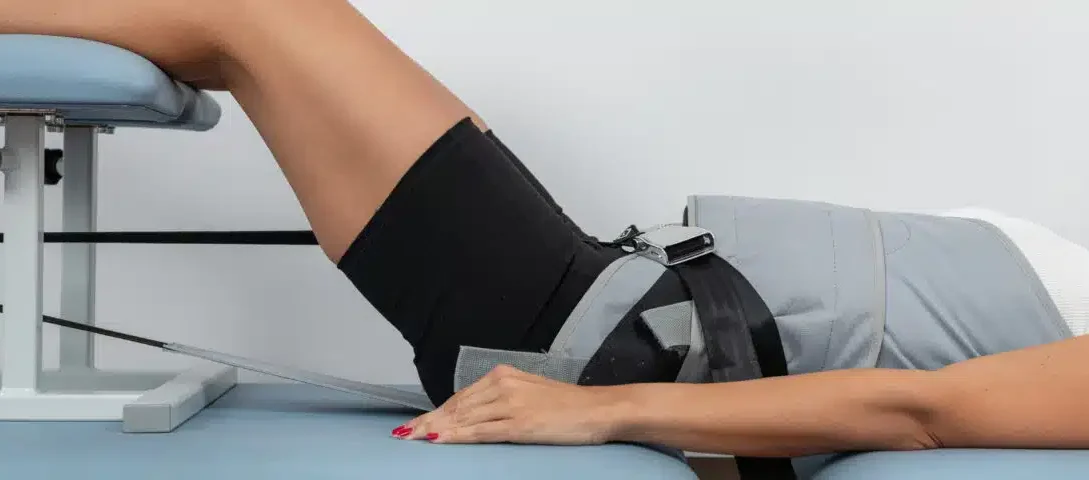
Spinal Decompression Therapy is a noninvasive approach that uses a specialized table or traction system to apply controlled pulling forces to the spine.
Some patients report reduced pressure or improved comfort following treatment, but decompression is not appropriate for every condition. Understanding the process, available evidence, and safety considerations can help you have a more informed conversation with a qualified healthcare provider.
What Is Spinal Decompression?
Spinal decompression generally refers to a form of motorized traction. The patient lies on a treatment table while a computerized or mechanically controlled system applies gradual pulling and releasing forces.
The treatment may be directed toward the lumbar spine for lower-back concerns or the cervical spine for selected neck conditions.
The purpose is to create controlled separation between spinal structures. Advocates suggest that this may temporarily reduce pressure around certain discs or irritated tissues. However, research has not established that decompression permanently repairs a damaged disc or realigns the spine.
Non-surgical Spinal Decompression should therefore be viewed as one possible conservative component of a wider care plan rather than a guaranteed alternative to every surgical procedure.
Is Decompression the Same as Traditional Traction?
The terms decompression and traction are sometimes used interchangeably, but providers may describe them differently.
Traditional Traction Therapy For Spine conditions applies a pulling force for a set period. Motorized decompression systems may change the force, angle, and timing during the session.
Despite differences in equipment and marketing terminology, both approaches use traction-based principles.
Patients should ask the provider:
- Which system will be used?
- How is the force controlled?
- Why is traction being recommended?
- What condition is the provider trying to address?
- How will progress be measured?
- What alternatives are available?
Equipment alone does not determine whether treatment will be effective. Proper assessment, patient selection, and realistic expectations remain essential.
What Does the Evidence Show?
Research on motorized spinal decompression and traction has produced mixed results.
A systematic review indexed by PubMed concluded that the effectiveness of motorized decompression for chronic disc-related lower-back pain remained unproven because study quality was low and patient groups varied considerably.
A Cochrane review of traction for lower-back pain found that traction, either alone or combined with physical therapy, was generally not more effective than sham treatment or other approaches for broad groups of patients with lower-back pain.
Some smaller and more recent studies have reported improvements in selected patients. However, these findings do not yet prove that decompression works consistently or that it is superior to other conservative treatments.
A responsible provider should explain this uncertainty instead of guaranteeing results.
Who May Be Evaluated for Decompression?
A chiropractor or another qualified provider may evaluate decompression as an option for people with:
- Disc-related lower-back discomfort
- Selected cases of radiating leg symptoms
- Certain herniated or bulging discs
- Degenerative disc changes
- Persistent mechanical back pain
- Symptoms affected by spinal loading
- Recurring tightness or limited movement
Having one of these conditions does not automatically make someone a candidate.
Before recommending Spinal Decompression Treatment, the provider should review the patient’s health history, symptoms, examination findings, previous care, and available imaging.
Can Decompression Help a Herniated Disc?
A herniated disc occurs when material inside a spinal disc pushes through its outer layer. Some herniated discs cause pain or nerve symptoms, while others appear on imaging without producing any symptoms.
Herniated Disc Decompression is sometimes promoted as a way to reduce pressure around an affected disc or nerve. However, it should not be described as physically pulling every disc back into place.
Many disc-related symptoms improve with time and appropriate conservative care. Depending on the case, management may include:
- Activity modification
- Guided exercise
- Physical therapy
- Medication
- Chiropractic care
- Education
- Injections
- Surgical consultation
A provider offering Herniated Disc Treatment Coral Springs services should connect the treatment recommendation to the patient’s symptoms and examination rather than relying on an imaging finding alone.
What About Nerve-Related Symptoms?
Nerve irritation may cause pain, tingling, numbness, burning, or weakness that travels into an arm or leg.
Some people search for Nerve Pressure Relief Therapy when these symptoms persist. Before beginning decompression, it is important to identify whether the symptoms may be related to a disc, joint, muscle, peripheral nerve, or another medical condition.
Progressive weakness, loss of bowel or bladder control, numbness around the groin, or rapidly worsening symptoms require urgent medical evaluation.
Decompression should never delay appropriate diagnostic testing or emergency care.
Spinal Decompression for Lower-Back Pain
Spinal Decompression For Back Pain may be considered when a provider believes traction could be appropriate for the patient’s particular presentation.
Lower-back pain is not a single condition. It may involve muscles, joints, discs, nerves, inflammation, injury, medical illness, or several factors at once.
This is why a complete assessment matters. The provider should determine:
- When the pain began
- Whether it travels into a leg
- Which movements affect it
- Whether weakness or numbness is present
- What treatments have already been attempted
- Whether imaging is necessary
- Whether any warning signs require referral
Treatment should address the individual instead of assuming every episode of back pain has the same cause.
How Chiropractic Spinal Decompression Fits Into Care
Chiropractic Spinal Decompression may be included within a plan that also uses adjustments, mobilization, movement guidance, posture education, or other conservative strategies.
According to the National Center for Complementary and Integrative Health, spinal manipulation may produce small improvements in pain and function for some people with acute or chronic lower-back pain.
This evidence applies to spinal manipulation generally, not specifically to motorized decompression.
Combining therapies does not guarantee a better outcome. Every component should have a clear purpose and should be adjusted according to the patient’s progress.
What Happens During a Session?
A typical session begins with the patient lying on a specialized table. A harness or support system may be positioned around the hips, torso, or head depending on the treatment area.
The provider selects the force, angle, and duration based on the patient’s condition and comfort.
During the session, the patient may feel:
- Gentle pulling
- A gradual stretching sensation
- Pressure being applied and released
- Temporary relaxation around the treatment area
- Little sensation beyond lying on the table
Treatment should not produce severe pain, new numbness, dizziness, or worsening weakness. Any concerning change should be reported immediately.
A session may last between approximately 15 and 30 minutes, although protocols vary by system and clinic.
Is Spinal Decompression Painful?
Decompression is generally intended to be comfortable. Some patients feel a mild stretch, while others notice little during the session.
A person with highly sensitive symptoms may not tolerate traction well. The provider should begin conservatively and adjust the force based on feedback.
Advanced Spinal Decompression Therapy does not mean using the strongest possible force. Advanced care should involve careful patient selection, controlled settings, clear communication, and progress monitoring.
Stronger traction is not automatically more effective.
When Is Decompression Not Appropriate?
Spinal decompression may be unsuitable for people with certain conditions, including:
- Severe osteoporosis
- Spinal instability
- A recent fracture
- A spinal tumor
- Active infection
- Recent spinal surgery
- Certain surgical implants
- Severe nerve compression requiring urgent care
- Abdominal aortic aneurysm
- Some pregnancy-related circumstances
- Conditions that worsen with traction
This is not a complete list. Patients should share all medical conditions, medications, procedures, and previous injuries before treatment.
A qualified provider should also refer the patient when another type of medical care is more appropriate.
What Are the Possible Side Effects?
Some patients may experience temporary soreness, stiffness, muscle tension, or increased discomfort after traction-based treatment.
New or worsening neurological symptoms should not be ignored. Contact an appropriate healthcare professional if you experience:
- Increasing numbness
- New weakness
- Severe radiating pain
- Loss of coordination
- Changes in bowel or bladder control
- Numbness in the saddle area
The provider should explain potential side effects and what to do if symptoms worsen.
How Many Sessions Are Needed?
There is no universal number of decompression sessions.
The suggested frequency may depend on:
- The condition being addressed
- Symptom duration
- Functional limitations
- Response to initial sessions
- General health
- Other treatments being used
- Patient goals
Be cautious of a clinic that recommends an extensive prepaid plan before assessing how you respond.
A reasonable Decompression Therapy For Discs program should include progress reviews and clear criteria for continuing, changing, or ending treatment.
If meaningful improvement does not occur, the provider should reconsider the diagnosis, approach, or need for referral.
Does Decompression Permanently Repair the Spine?
No treatment can guarantee permanent disc repair or lifelong pain relief.
Disc structure changes naturally with age, and imaging findings do not always match a person’s symptoms. Someone may have a bulging disc without pain, while another person may experience significant discomfort with relatively minor imaging findings.
Claims that decompression permanently restores every disc or prevents all future pain should be treated cautiously.
Non Invasive Spine Decompression Coral Springs services should be discussed as part of conservative care with measurable goals, realistic expectations, and a plan for reassessment.
Supporting Treatment With Movement and Daily Habits
Passive treatment alone may not address every factor contributing to recurring discomfort.
Depending on the patient, a wider care plan may include:
- Gradual return to activity
- Appropriate strengthening
- Mobility exercises
- Workstation adjustments
- Safer lifting strategies
- Sleep-position changes
- Weight management support
- Regular walking
- Physical therapy
- Medical pain management
The goal is to help patients participate in their recovery rather than depend indefinitely on one treatment.
Questions to Ask a Decompression Provider
Before choosing a Spinal Decompression Chiropractor Coral Springs, ask:
- What diagnosis or finding supports this treatment?
- Is decompression appropriate for my symptoms?
- What does current research show?
- What risks apply to me?
- Are there reasons I should avoid traction?
- How will progress be measured?
- How many sessions will we try before reassessing?
- What other treatments should be considered?
- What happens if I do not improve?
- When would you refer me to another provider?
Clear answers can help you make a more informed decision.
Choosing a Spinal Decompression Clinic
People searching for the Best Spinal Decompression Near Coral Springs should avoid choosing a provider based only on advertisements or guaranteed outcomes.
Look for a clinic that:
- Completes a detailed assessment
- Reviews relevant medical history
- Screens for contraindications
- Explains the evidence honestly
- Creates an individualized plan
- Begins with appropriate settings
- Monitors symptoms during treatment
- Measures progress
- Coordinates with other healthcare professionals
- Refers patients when necessary
A reputable Spinal Decompression Clinic Coral Springs should prioritize patient safety and informed decision-making over selling a fixed treatment package.
Spinal Decompression in Coral Springs
Align Chiropractic Spine and Wellness offers Spinal Decompression Therapy Coral Springs services as part of its corrective chiropractic approach.
Dr. Nick Libian integrates decompression with examination findings, corrective chiropractic adjustments, spinal diagnostics, and personalized care planning when appropriate.
Patients considering treatment can begin with a complete evaluation to determine whether decompression fits their symptoms, health history, and goals.
Spinal decompression is not a guaranteed solution for every disc or back condition. For selected patients, however, it may be considered as one part of a responsible, non-surgical care plan that includes realistic expectations and ongoing progress reviews.