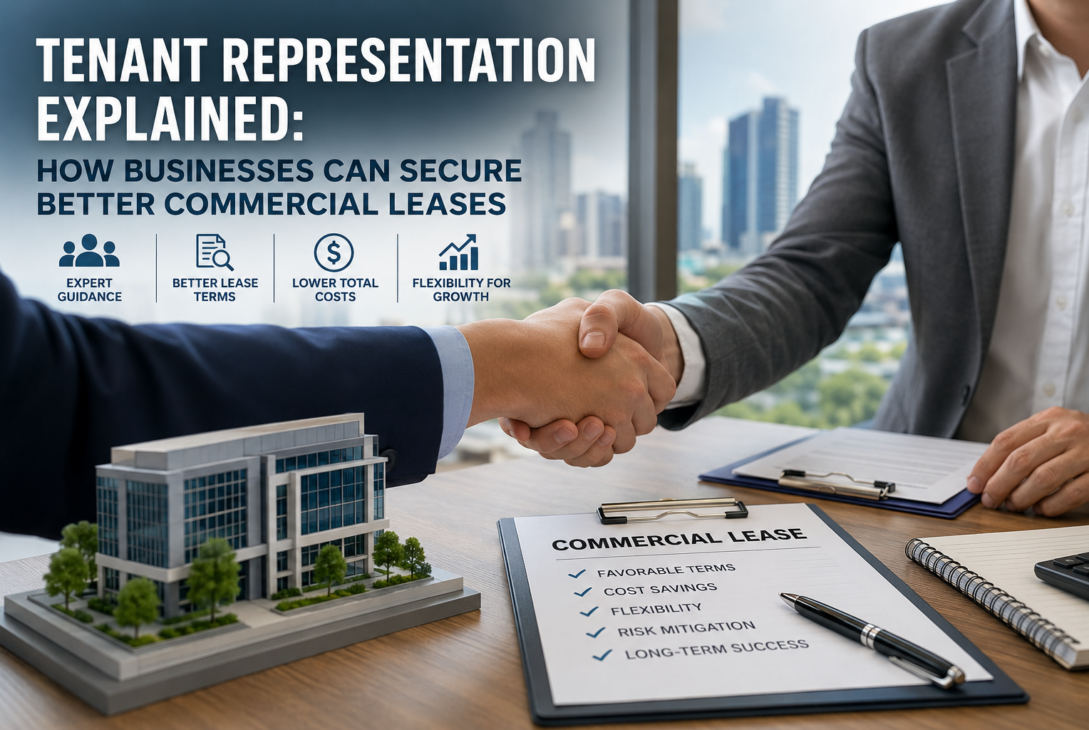
One of the largest obligations most businesses will ever undertake is the signing of a commercial lease. Whether you are opening your first location, expanding operations, or moving to accommodate future growth, the lease you sign can impact your costs, flexibility, and ability to succeed well into the future.
I have watched countless business owners go through the pain of weeks comparing properties, only to find later that the real costs weren’t in the rent, but in the lease terms. This is why having someone on your side who has experience in commercial leasing from a tenant’s perspective can make such a huge difference.
By contrast, a commercial real estate advisor focused solely on your needs helps identify your perfect space and negotiate terms that benefit your business, rather than safeguarding the property owner. Simply finding available space is not enough for a transaction to happen.
What Tenant Representation Really Means
Commercial leasing is not just about picking a building and signing a bit of paper. Each lease is full of legal and financial obligations that will affect your company’s future operations.
Tenant reps only represent the tenant leasing the space. A listing broker typically has a fiduciary duty to the landlord. Still, a tenant advisor is focused on making the best deal for the business as a whole, researching the available property options and minimizing financial risk.
That independent guidance helps keep the negotiation process more balanced, particularly for business owners who do not negotiate commercial leases regularly.
Why Businesses Benefit From Professional Lease Representation
Many companies assume they can negotiate directly with a landlord to save money. While that seems reasonable, commercial leasing is a specialized field where experience often creates measurable financial advantages.
Analyzing market characteristics, rental prices, common lease types, and negotiation techniques that many business owners just never come across in their daily job — this is what a professional advisor excels in.
They move beyond simply comparing advertised rental prices and look at what the true cost of occupation will be over the full length of the lease, including maintenance costs, operating costs, rent escalations, and other financial liabilities that could drastically impact long-term affordability.
This wider view usually leads to better decisions than focusing on the lowest monthly rent.
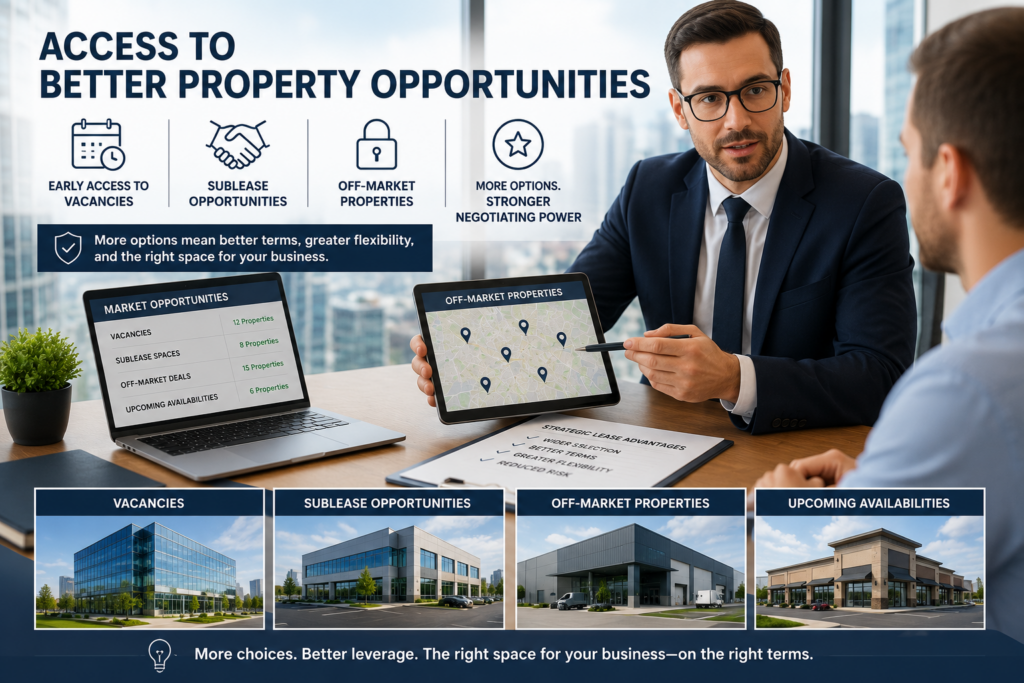
Access to Better Property Opportunities
Assuming that your new rent will be somewhere around double, there is one advantage that a large portion of the business proprietors neglect to perceive: not every commercial property available is as highly advanced.
Leasing executives with experience often have advance notice of vacancies, sublease opportunities, and off-market properties. These expanded options provide greater selection and strengthen our negotiating power because companies are not restricted to publicly traded properties.
More options also relieve the pressure of having to settle for substandard lease conditions due to insufficient inventory.
Stronger Lease Negotiations
This is where the value of professional representation is most pronounced during the negotiation phase.
Lease contracts for Commercial real estate involve much more than rental rates. Almost any aspect of the lease may be negotiated based on the market and what the landlord is trying to accomplish.
Common negotiation points include:
- Base rental rates
- Free rent periods
- Tenant improvement allowances
- Lease renewal options
- Expansion rights
- Maintenance responsibilities
- Operating expense limitations
- Early termination provisions
- Rent escalation clauses
Modest changes in these areas could mean big savings over the life of a lease, with added operational flexibility.
Avoiding Costly Lease Mistakes
A lesson that many seasoned business owners eventually come to learn is that low rent does not always equal an affordable lease.
Some have high maintenance costs, or tenant restrictions on how they operate, or high renovation requirements, or annual expense increases that boost the cost of occupancy.
An experienced advisor carefully scrutinises these details before commitments are made.
They also clarify lease language with simple English, making it easier to understand your obligations before you hit sign.
That understanding minimises the risk of unforeseen costs or contract disputes further down the line.
How Commonly the Leasing Process Appears
An overview of the business that you are considering comes first, not the process of touring available properties that should act as a solution.
An advisor should assess a few important variables like:
- Required square footage
- Budget expectations
- Operational needs
- Customer accessibility
- Employee convenience
- Parking requirements
- Future growth plans
- Desired lease flexibility
Once you know this, it’s much easier to find the right property.
After being shown a few pre-screened estates, each is assessed against the total cost of occupancy, the structure of the lease, the business utility, and value over the term—not just the rent advertised.
As soon as the desired property(ies) are pinpointed, negotiations start, culminating with review of the letter of intent and final lease contract.
At each point, the goal is to protect the tenant’s business interests.
Key Questions Every Business Needs to Ask
Before committing to any commercial lease, it’s worth asking several practical questions.
- How will operating expenses change over time?
- Who pays for repairs and maintenance?
- What happens if your business needs additional space?
- Can the lease be assigned if ownership changes?
- Are there options to renew under favorable terms?
Understanding these issues before signing helps avoid costly surprises later.
Good advisors encourage these conversations early rather than after documents are finalized.
Who Should Use Professional Lease Services?
Even if it is always beneficial for any company to receive expert lease advice, some organizations achieve more advantages.
Startups scale up with the intention to grow.
Retail businesses are a great resource since you evaluate the proximity to customers and adjacent competition.
Often, medical offices need to be designed around a very specific layout and infrastructure.
These users require loading access, ceiling height, utilities, and the ability to operate efficiently.
Objective market knowledge that also aids in superior site selection is also beneficial to businesses relocating into unknown markets.
Even company renewals of an existing lease can usually negotiate better financial terms with access to current market data and help from a seasoned professional.
How To Choose The Right Commercial Leasing Advisor
Not all commercial real estate professionals are created equal.
Your agent should be experienced in leasing, have strong market knowledge, communicate easily with you, and have a basic understanding of your industry.
Inquire about recent lease negotiations that they have performed, what are their checklists/ yard sticks of measuring occupancy costs, and how they conduct negotiations.
It is equally important to know how the compensation really works before starting the relationship. Fee structures and transactions vary; it is better to discuss expectations early to ensure all parties involved are on the same page.
Frequently Asked Questions
Landlord’s broker vs tenant representative: what is the difference?
The landlord broker has to defend and serve the commercial property owner. At the same time, a tenant-centric advisor works on behalf of the business leasing the space and sits on the other side of the negotiating table.
Professional lease representation can save dollars.
Yes. The cost-effectiveness of negotiating better lease terms — not just occupancy costs and tenant improvement allowances, but also flexible lease provisions — can translate to substantial long-term savings.
Invariably, is the cheapest rent the best rent?
No. Total occupancy cost is much more than the rent advertised, including operating expenses, maintenance obligations, penetration of PIK, escalation clauses, and other cash flow commitments that can make a seemingly lower rent expensive in absolute terms.
Should small businesses use lease representation?
Absolutely. Professional guidance during negotiations is even more valuable for small businesses, as they typically do not have the resources to deal with a sudden increase in lease costs.
When should a business seek lease representation?
The earlier the better. Having an advisor engaged before you begin the search for property offers greater leverage in negotiations and allows you to consider any available option without bias.
Train Yourself To Make Better Lease Decisions
Commercial real estate lease forms your monthly rent, and so much more — it governs operational flexibility, financial stability, and future business growth. Knowing exactly what to look for helps businesses make informed decisions during their search, evaluation, and negotiation process, saving time and money.
With every lease condition able to influence your business’s future, walking into negotiations without experienced help isn’t a luxury. This practical investment will bring value to you for the duration of your lease.